
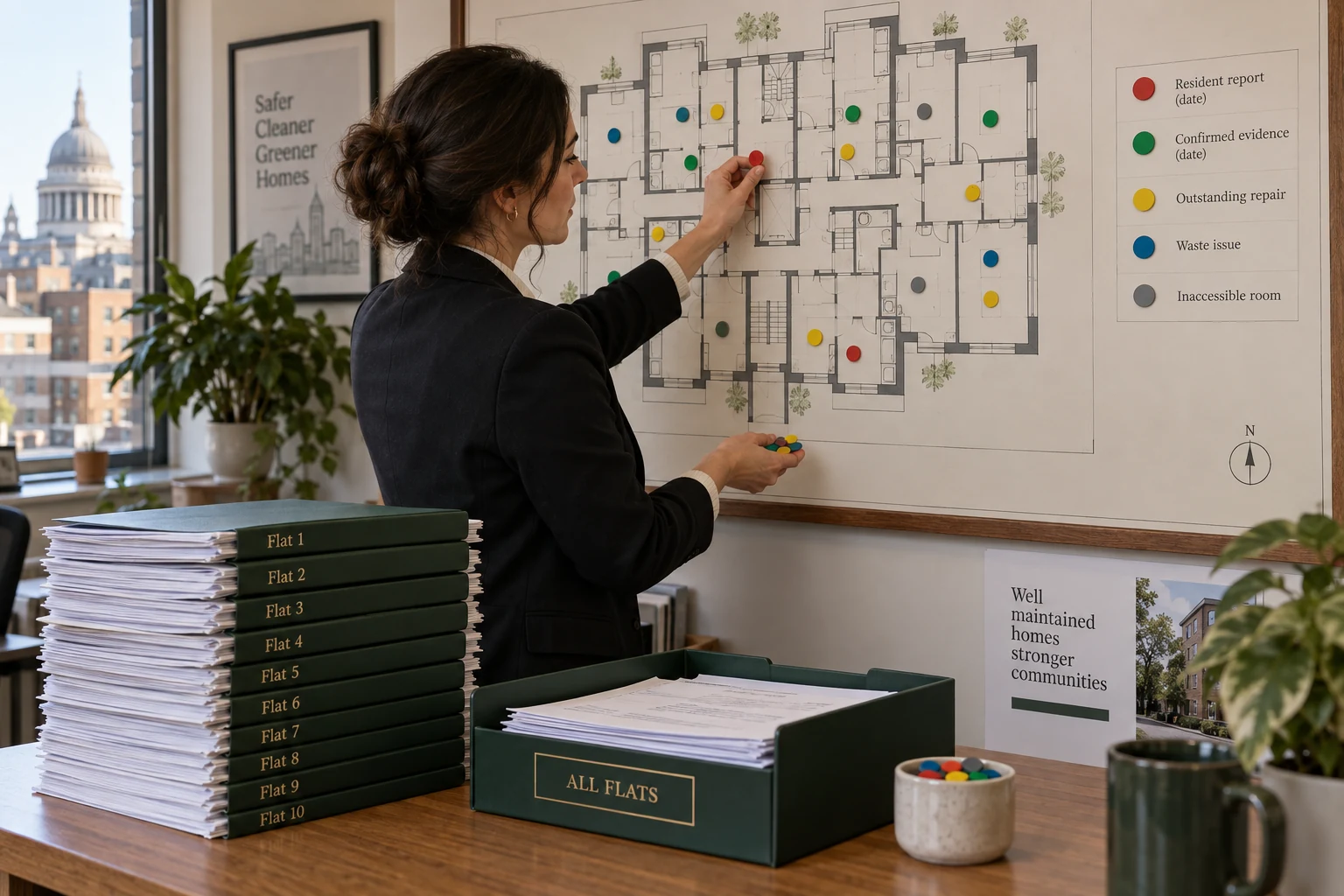
Treat recurring reports as a building pattern to test, not a series of isolated call-outs. Put each report on one property map, separate confirmed evidence from resident descriptions, and connect pest actions with outstanding repairs, waste issues and inaccessible areas.
Normalise the record
Use the same fields: unit, room, date, observable sign, evidence status, access and action. Merge duplicate calls about one event without deleting the reporters. Avoid counting “heard scratching” and “possible mice” as two incidents when they describe the same observation.
Plot shared risers, drains, roof voids, bin stores and adjoining units. A cluster along one service line suggests a different inspection from unrelated reports on separate floors. No report from a locked unit does not mean it was inspected clear.
Split the action owners
The pest contractor assesses evidence and control. Facilities owns gaps, drainage and building fabric. Cleaning and waste teams own their scheduled tasks. Property management arranges permission and resident communication. Give every recommendation a due date and closure evidence.
Review whether the same access failure or unrepaired defect appears in successive reports. Another treatment visit may add little if the shared route remains unavailable. Conversely, a repaired gap does not establish that present activity has ended.
Communicate without blame
Tell residents what area needs access, what preparation applies and where to report new signs. Do not circulate names, health details or assumptions about household behaviour. Summaries can show trends by unit or route while limiting personal data.
Call 0203 393 2338, or read the maintenance contract page.
Frequently asked questions
When is a report recurring?
Use a defined period and location; the useful question is whether evidence or a route repeats.
Should every report trigger treatment?
No. Triage may call for inspection, identification, access or repair first.
What closes an action?
Dated evidence that the assigned task was completed, plus any stated review.
Sources and further reading
External references may contain pest or skin photographs.