
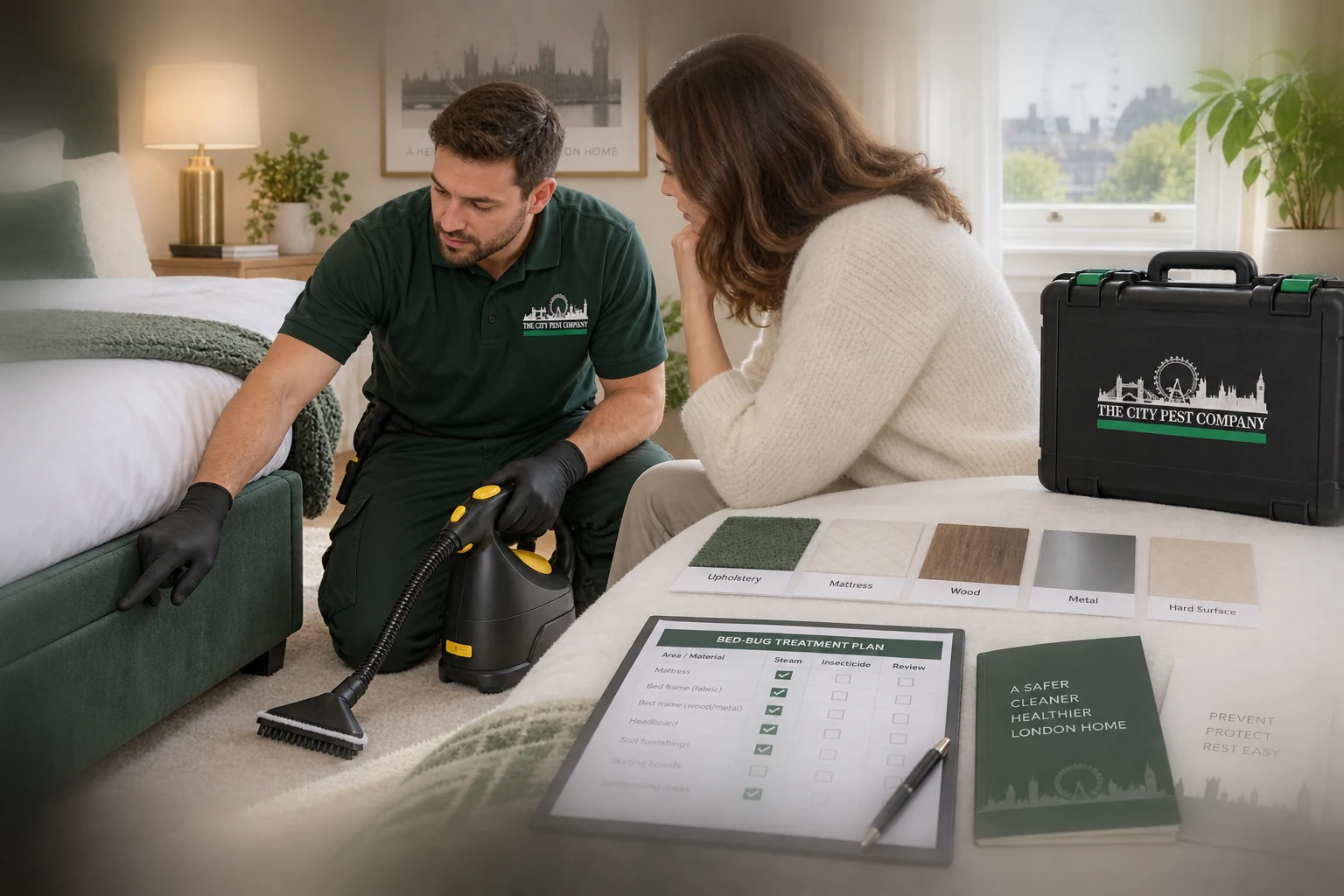
Ask where each method will be used, what evidence supports it, which materials can tolerate it and how the result will be reviewed. Targeted steam is not the same as heating an entire room, and “insecticide” is not one universal product or application.
Keep the methods distinct
Steam is applied directly to selected accessible surfaces and harbourages. Whole-room heat treatment raises the temperature of a controlled space with specialist equipment and monitoring. BPCA guidance explicitly distinguishes steam from professional whole-room heat and stresses trained, competent operation and preparation.
For steam, ask which seams, frames, furniture joints or edges are in scope; how delicate finishes, electrics and moisture-sensitive materials are protected; and which concealed areas cannot be reached. Do not use a wallpaper stripper or domestic steamer as a substitute for a professional plan.
For insecticide, ask for the product name, authorised target, surfaces, application areas, access restrictions and written aftercare. HSE says the product must be suitable for its intended use, the label must be followed and members of the public must not use professional-only products. The article cannot name an “approved” product for a property it has not assessed.
Ask how the methods work together
A proposal may use more than one control, but each should have a purpose. Ask whether steam is intended for an accessible furniture edge while a residual product is used elsewhere, and how cleaning or moisture affects the plan. The sequence, preparation and follow-up should be written rather than inferred.
Suppose a divan has accessible external seams but enclosed internal cavities. A proposal should state what steam can reach, what remains inaccessible and how those areas are addressed. “Steam the bed” hides the most important limit.
Tell the provider about children, pets, pregnancy, allergies, aquariums, valuable textiles and products already used. Do not combine products or add steam between visits. Follow the instructions for the selected method, including re-entry and cleaning.
Expect preparation to explain its purpose
A useful preparation sheet names the items and areas affected by each instruction. If clothing must be contained, it should say which clothing, how it is labelled and when it can be released. If furniture access is required, it should identify who can move heavy or fixed sections. Blanket instructions to empty a room or bag every possession can create avoidable handling without improving access.
Ask how the technician will protect untreated rooms while equipment and belongings move through the property. In a furnished flat, the route to a sofa or bed may matter as much as the target surface. Preparation should preserve evidence and access rather than make the home look empty.
Judge the proposal by evidence
The plan should identify the bed bug evidence, rooms inspected, treatment boundaries, preparation, visits and review criteria. It should also say what happens if another room shows evidence or access cannot be achieved. No method name alone guarantees an outcome.
Call The City Pest Company on 0203 393 2338 to discuss an assessed bed-bug plan. See bed-bug treatment in London for service context.
FAQs
Is steam a whole-room heat treatment?
No. Targeted steam applies heat and moisture directly; professional room heat is a different controlled process.
Can steam be used on every material?
No. Ask about heat, moisture, finish, electrics and access for each item.
Is insecticide always required?
The appropriate controls depend on evidence, property, access and professional assessment.
Can I use another spray between visits?
Do not combine or repeat products outside the agreed plan and label instructions.
Sources and further reading
External references may contain pest or skin photographs.