
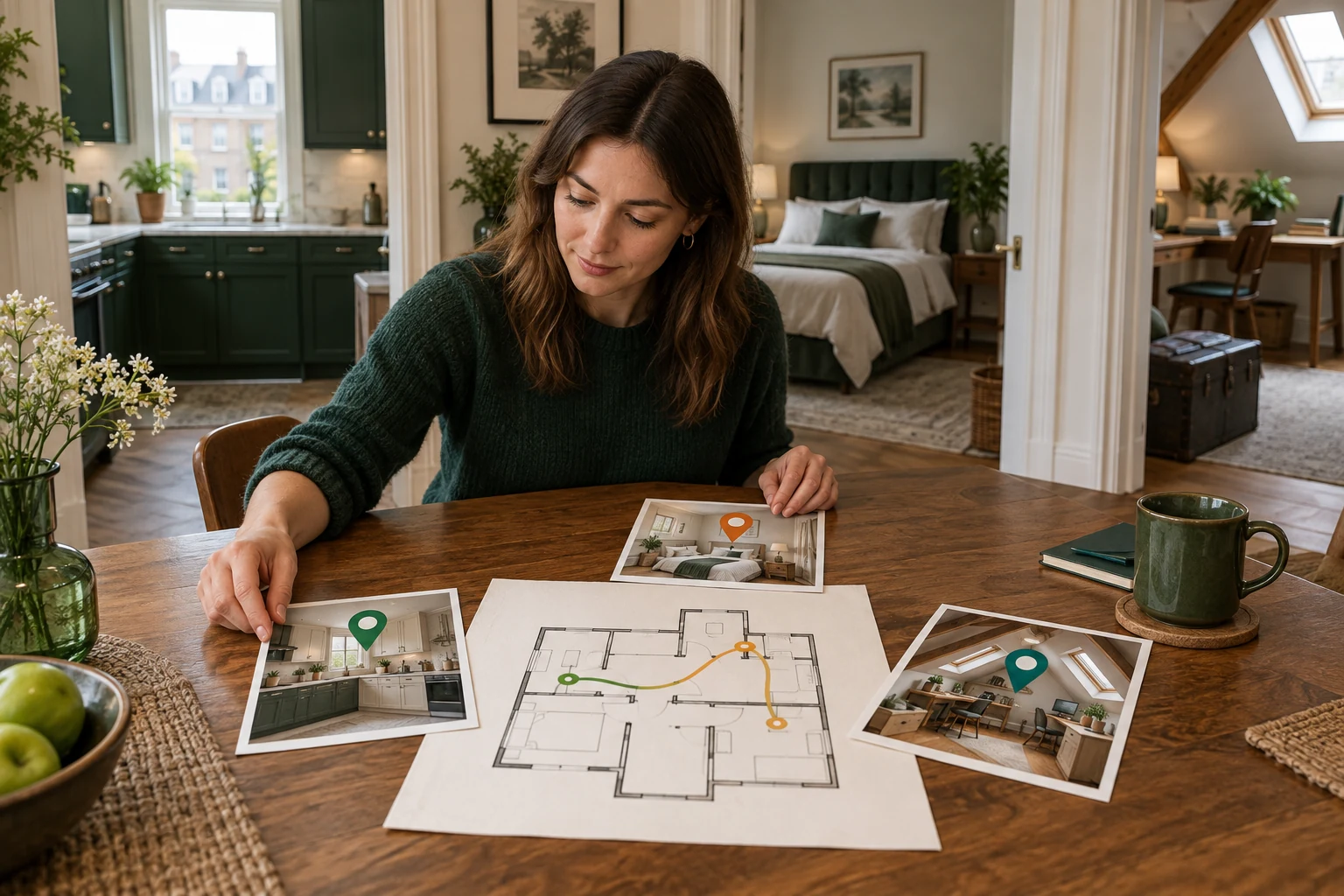
Make one short record for each room before you move belongings. Signs in a kitchen, bedroom and loft may be connected, or they may have different causes. A room map preserves both possibilities and gives an inspector a useful route through the property.
Use the same headings, not the same conclusion
For each room, note the date, exact surface, appearance, frequency and what changed shortly beforehand. “Fine debris beneath the rear shelf of the sink cupboard on three mornings” is useful. “Pests in kitchen” loses the position and pattern. Add room use, shared walls, pipe routes, stored food or textiles only where relevant.
Mark rooms where nobody has observed a sign as “nothing reported”, rather than “clear”. Some spaces may not have been checked, and concealed areas remain concealed. Note locked cupboards, heavy furniture and unsafe loft access instead of trying to reach them.
Keep photographs and specimens tied to their origin. A filename such as “bedroom-wardrobe-left-shelf-19-Sept” is easier to interpret than a camera roll of close-ups. Put a safely contained specimen in a labelled pot. Do not carry open bags, loose bedding or shelf contents to a central sorting area.
Look for routes without inventing one
Once individual records are complete, add shared features: a continuous pipe chase, party wall, corridor, waste area or delivery route. These can guide inspection, but a line on the plan is not proof of movement.
Suppose there is fine debris in a kitchen cupboard, damage to a wool blanket in a bedroom and night noise above a hallway. Treating these as one infestation would be premature. The overview should preserve three locations and three types of observation. Identification may connect some, separate all three or find that one is not pest-related.
Record recent changes in a separate timeline: travel, second-hand furniture, building work, leaks, deliveries or stored items returned to use. Do not use these facts to blame a person or declare a source. Their value is in showing the order of events.
Prepare access deliberately
Ask which rooms and edges the inspector needs to see. Clear safe walking routes, but keep suspect belongings in their original room unless instructed otherwise. Photograph fixed or crowded areas in advance and flag anyone who cannot move furniture. Pets, children, mobility needs and shared entrances should be part of the access plan.
List any sprays, traps, cleaning or repairs already tried with dates and locations. This explains missing or altered evidence. Leave installed devices where they are and do not add another method before the visit.
Call The City Pest Company on 0203 393 2338 when signs repeat, occur in several rooms or remain hard to identify. Start with the room map rather than a diagnosis. The pest identification page provides service context.
FAQs
Should I inspect every room before calling?
No. Record what is already safely observable and say which areas were not checked.
Can I put all suspect items in one room?
Avoid doing that. It removes the original location context and makes the inspection harder to interpret.
What if two people describe the same sign differently?
Keep both factual descriptions and add a photograph or specimen where safe. The inspector can assess the uncertainty.