
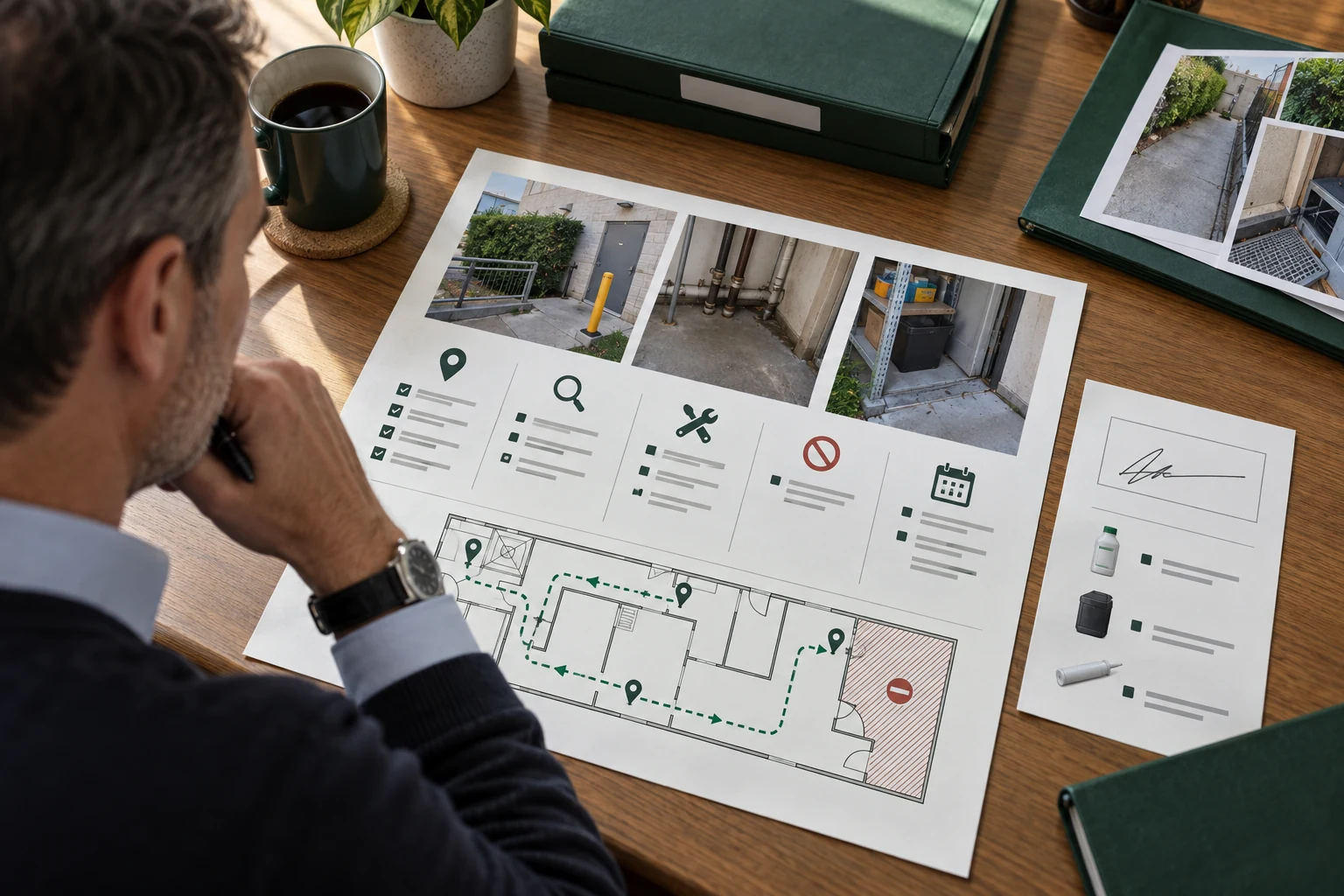
A visit report should allow a manager who was not present to understand where the technician went, what was observed, what action was taken, what could not be checked, who acts next and when the issue will be reviewed. A signature and list of product names are not enough.
Fix every finding to a place
The report needs the site, date, technician and exact areas accessed. Use consistent room and asset names. “Mouse evidence in store” is hard to compare next month; “fresh gnawing on lower edge of rear door in ground-floor dry store” can be photographed, repaired and revisited.
Separate confirmed identification, suspected evidence and environmental condition. A damaged bag is an observation. The species, route and extent may remain open. Where photographs are used, number them and connect them to the location and text.
Inaccessible areas belong in the main report, not a footnote. Record locked rooms, blocked perimeter edges, unsafe voids and refused access. “No evidence found” should apply only to the areas and inspection method actually used.
Explain actions and restrictions
For each monitor, trap or product, the report should give the location, purpose and relevant safety or access instruction. It should state what was serviced, removed or left in place. Product use must follow the actual label and site assessment; a property manager should not have to infer precautions from a stock code.
FSA pest-control guidance for food businesses says contractor contact details and visits, feedback and action points should be kept in the diary. It also warns that bait and chemicals must not contact food, packaging, equipment or surfaces. A food-site report should therefore integrate with the business’s food-safety record and clearly identify protected areas and any operational action.
Recommendations need an owner and review. “Improve proofing” is not manageable. An action should name the opening, responsible trade, target date and how closure will be verified. If the technician cannot specify a compliant fire, ventilation or structural repair, the report should refer the issue to the relevant specialist.
Show change between visits
A contract report is most valuable as a sequence. Carry unresolved actions forward, compare device or observation locations consistently and explain why the plan changed. Do not overwrite an earlier finding when a later visit reaches a different conclusion.
At the review point, close an action only when completion has been evidenced. If access failed, record the attempt and next step. If no further visit is proposed, say who will monitor and what trigger brings the issue back into the contract process.
Call The City Pest Company on 0203 393 2338 to discuss a reporting scope for your premises. See the maintenance contracts page for service context; service levels and report deliverables should be agreed in the actual contract.
FAQs
Should a report include every device location?
It should identify devices clearly enough for safe management, servicing and audit, subject to the site plan and security needs.
Is “no activity” an all-clear?
No. It is a finding for the accessible areas and date described in the report.
Who closes proofing actions?
The log should name the person who completes the work and the person who verifies the relevant result.
Sources and further reading
External references may contain pest or skin photographs.