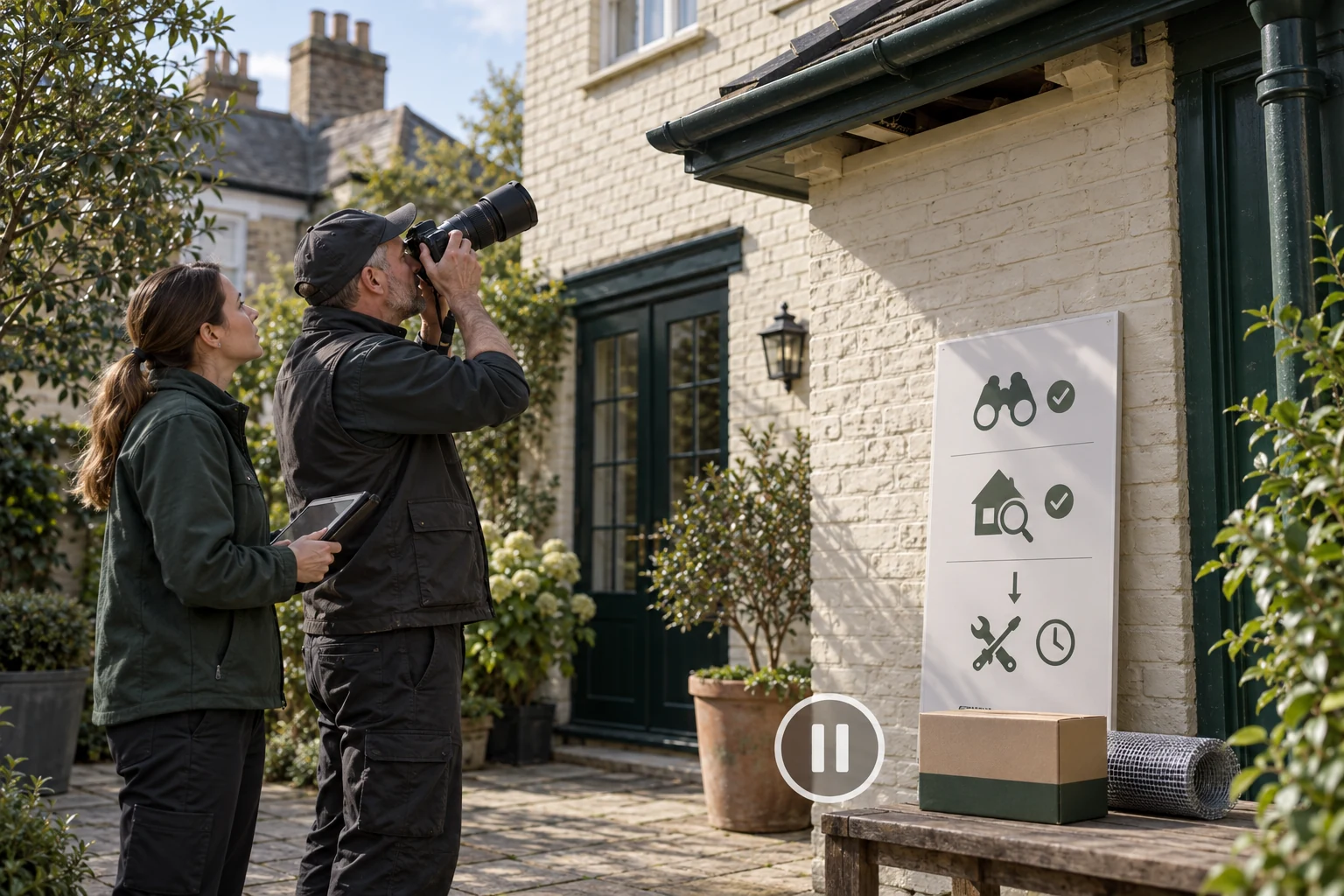
Do not seal a roof gap merely because it looks like an entry point. First establish what may be using it, whether an animal could still be inside, whether a nest or protected species changes the work, and which contractor should make the building repair. The correct sequence prevents a quick patch from trapping wildlife or concealing the real defect.
Treat the gap and the activity as separate questions
A lifted tile, chewed soffit edge or opening around a pipe may be a possible route. It may also be a roofing or service defect needing its own assessment. Record the external feature from a safe position and map any internal noise or signs against it, but do not treat alignment as confirmation.
Useful notes include the time and pattern of noises, external sightings, disturbed insulation visible from a boarded safe area, gnawing and changes after weather or building work. Avoid entering an unsafe loft, walking on coverings or leaning from windows. If the view is limited, make that an explicit survey requirement.
Species matters because timing and lawful options differ. GOV.UK states that in England it is an offence intentionally to take, damage or destroy a wild bird’s nest while it is being used or built, and some birds have further disturbance protection. A date on the calendar does not establish whether the particular gap is unused. Bats and other wildlife require suitable specialist advice as well.
Decide the sequence before the repair
Ask the assessor to distinguish evidence of an animal, evidence of the route and condition of the building fabric. The plan should explain how occupancy will be checked, what happens if activity remains, who completes the repair and how completion will be reviewed. A pest technician can document a possible access point without certifying the tile, flashing, ventilation or structure.
Consider a slipped tile close to the area of loft noise. If the underside cannot be seen, immediately fixing the tile may close the only observed route while leaving uncertainty inside. A better sequence is a safe activity assessment, any lawful pest or wildlife action, then a competent roofing repair followed by monitoring suited to the finding.
Temporary work also needs boundaries. It should not block ventilation, drainage or safe escape, and it should not be represented as a permanent building repair. Record its purpose, owner and review date.
What to ask before anyone attends
Explain the roof height, available loft access, fragile areas, neighbouring property, shared eaves, power lines and any known nest or bat history. Ask what access equipment may be needed and which areas will remain outside scope. If images are proposed, clarify whether they are ground photographs, directly accessed views or a separately regulated drone operation.
Do not remove nesting material or disturb traps, devices or possible droppings. Keep people and pets away from unsafe roof spaces. If you hear an animal after work, record time and position and contact the responsible professional rather than opening the repair yourself.
When to call
Call when roof activity repeats, a visible gap aligns with internal signs, earlier sealing has not resolved the issue or safe viewing is impossible. Phone The City Pest Company on 0203 393 2338 to discuss the evidence and access. The roof surveys page provides service context; the precise capability and deliverables need confirmation for the site.
FAQs
Can I seal a gap while the property is quiet?
Quiet at one moment does not show that the route is unused. Ask how occupancy will be assessed before closure.
Who should repair a broken tile?
A competent roofing professional should assess and repair the building defect. Pest evidence can help decide timing and whether monitoring is needed.
Does a photograph prove the route is active?
No. It can document an opening, but activity and internal access may remain uncertain.
What if a nest is found?
Pause work and obtain appropriate advice. Current wildlife law and any relevant licence must be considered for the actual species and activity.
Sources and further reading
External references may contain pest or skin photographs.