
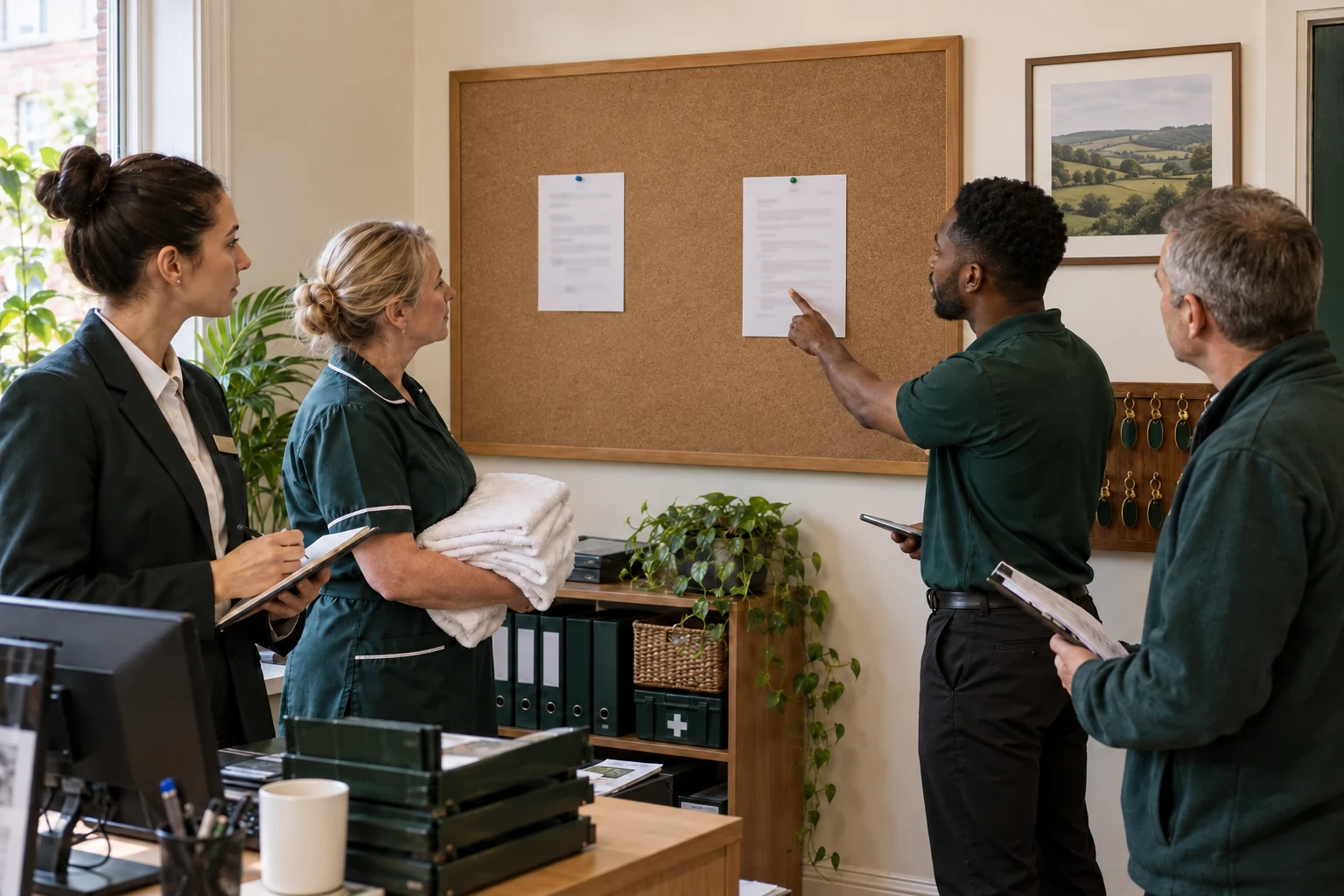
Before peak occupancy, give reception, housekeeping and maintenance one response route for pest observations. Define who protects a room or food area, who records evidence, who contacts guests and who can authorise inspection or repair.
Prepare rooms and records before arrivals
Check door seals, window screens, waste stores, laundry routes and accessible bed or furniture condition during normal turnover. Record defects by room and assign repairs before occupancy. Keep delivery and food-store checks separate from guest-room inspection.
Use an internal room number and observable description. Avoid guest names and travel history unless necessary for a defined purpose. A report of “insect at headboard joint” is actionable; a staff broadcast naming the guest is not.
Decide what happens when a sign is found
Staff should preserve the location, take a safe contextual photograph and notify the nominated manager. Do not strip linen into corridors, move furniture between rooms or spray a general product. The manager applies the accommodation's guest-care and food-safety policies while a pest professional assesses evidence.
For outdoor doors and dining, log repeated flight paths, bin defects and spills without treating every insect as a nest on site. For stock, quarantine affected packs under the business procedure and protect usable food.
Review after each incident
Record inspected and inaccessible areas, actions, owners and dates. Compare repeat reports by room and route rather than blaming a guest or cleaner. Before the next arrival, confirm which instructions remain active and which uncertainty is unresolved.
Call 0203 393 2338, or read the commercial pest-control page.
Frequently asked questions
Should every sighting close a room?
The site's policy and assessed evidence determine the response; staff need a clear escalation route.
Can housekeeping identify the pest?
Their role is to preserve and report evidence, not provide a diagnosis.
What should seasonal training cover?
Private reporting, safe photographs, prohibited movement or spraying, and the named manager.
Sources and further reading
External references may contain pest or skin photographs.