
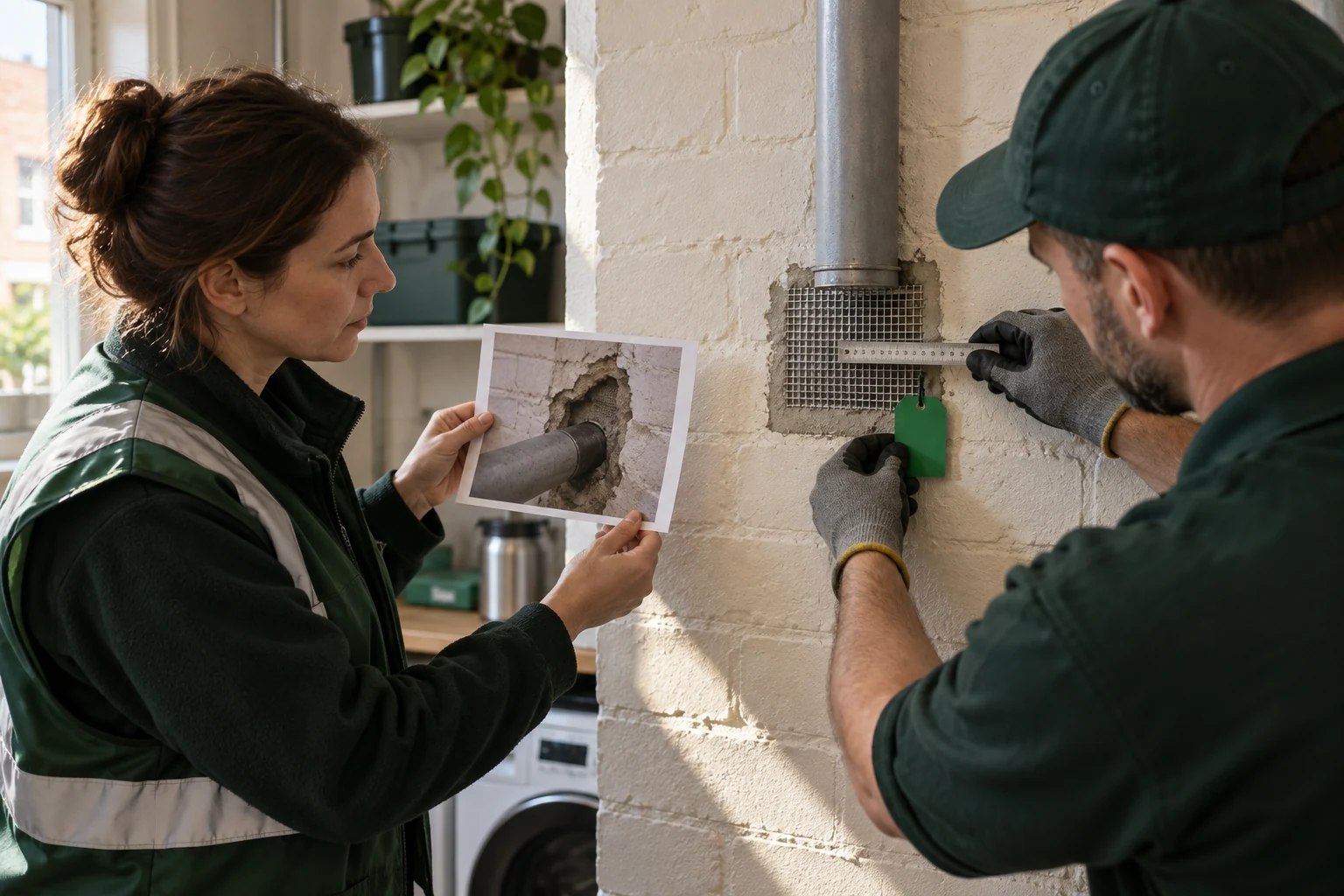
A pest-proofing recommendation is complete only when the exact location is recorded, someone owns the action, the responsible trade finishes it and an agreed check verifies the result. Marking an email “done” does not show what changed at the property.
Turn a recommendation into a repair record
Begin with a location another person can find: building, floor, room, wall or asset, plus an annotated photograph. “Seal hole in store” is ambiguous. “Opening around heating pipe on rear wall of ground-floor dry store, shown in photograph 4” can be handed to maintenance without asking them to guess.
Keep the reason separate from the repair. One field can state the observed pest evidence or possible route; another should describe the building issue for the competent trade to assess. This prevents a pest report from pretending to specify fire stopping, ventilation, electrical or structural work outside its author’s expertise.
Each action needs a responsible person, target date, access contact and status. Useful statuses are “raised”, “work reported complete” and “verified”. They distinguish a contractor’s completion notice from a physical check. Add a field for limitations where cupboards were locked, coverings remained in place or the photograph does not show the far side.
Verify the result that matters
Verification should match the repair. A clear dated photograph may be enough for a visible door-brush replacement. A complex service riser may need a return visit or coordination with the person responsible for the building system. Record substituted materials and partial access rather than treating them silently as the original recommendation.
Suppose a pipe gap in a communal cupboard is filled, but the cupboard is locked at the review visit. The trade’s action can be recorded as completed while verification remains pending. That is more accurate than reopening the repair task or declaring the route closed without seeing it.
When a repair is visible, compare it with the original photograph and look at its edges, adjoining services and any new damage. Monitoring may be appropriate after completion, but its purpose and review date should be explicit. No repair can promise permanent exclusion: later works, wear or another route may change the situation.
Keep responsibility visible across teams
Property managers often coordinate technicians, residents, cleaners and several trades. Use one action log rather than parallel email threads. The log should show who requests access, who gives notice, who completes the building work and who assesses later pest evidence. It should not make a legal judgment about who pays or who caused the condition.
At each pest visit, carry open actions forward. If the observation has changed, add a dated entry rather than rewriting the original. If a recommendation is no longer appropriate because the building has changed, record who made that decision and why.
When to escalate
Escalate repairs that block inspection, affect shared service routes, recur after apparently completed work or require a different professional discipline. Call The City Pest Company on 0203 393 2338 when you need pest evidence or monitoring interpreted alongside the repair log. See pest control for landlords and agents for service context.
FAQs
Who should sign off a repair?
The appropriate person depends on the work. A pest professional can review the pest-route concern; building performance may require the responsible competent trade.
Is a contractor photograph enough?
It can be, if it clearly shows the identified location and agreed result. Record when it cannot show concealed edges or the adjoining route.
Does proofing guarantee pests cannot return?
No. It addresses identified opportunities at a point in time. New damage, missed concealed routes and later alterations remain possible.
Should old actions be deleted after completion?
Keep the dated history. It allows later teams to compare recurring locations and see what was actually verified.