
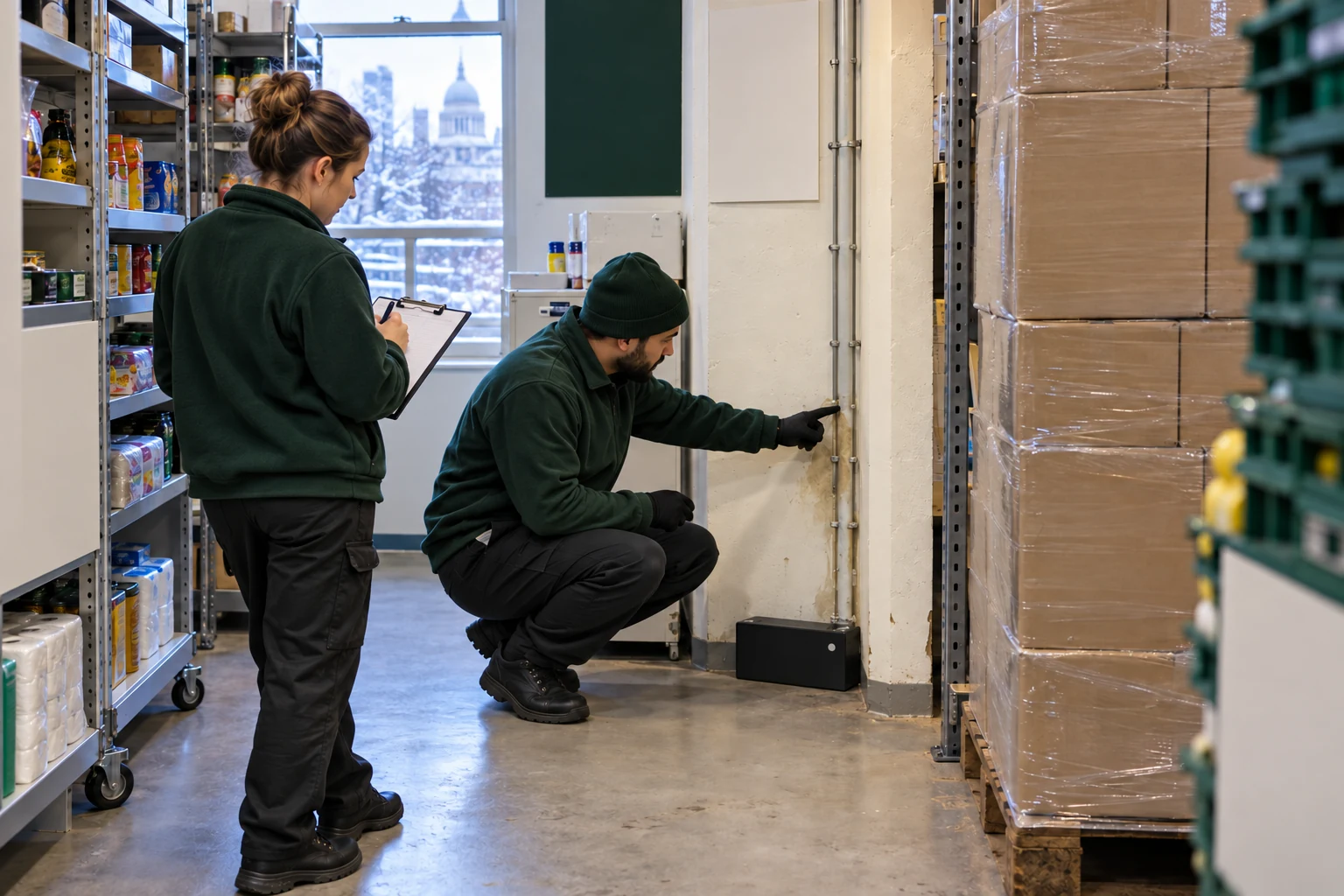
Use quieter winter periods and stock rotation to inspect edges that daily work rarely exposes. Check packaging, pallets, shelving, doors, service routes, leaks and waste records without opening unsafe stacks or moving contractor devices.
Plan the check around stock movement
Divide the room into aisles and wall zones. Schedule each zone when normal rotation creates safe access, rather than pulling every pallet into the gangway. Record blocked edges and the date they will become accessible.
Check packaging for gnawing, holes, spills or insects; look at floor-wall junctions, pipe routes, door seals and condensation. Tie every observation to a shelf, bay or pallet reference. Do not describe a damaged carton as a confirmed pest without supporting evidence.
Review deliveries and returns. Repeated damage linked to one incoming product needs a different response from debris behind long-undisturbed shelving. Keep suspect stock controlled under the business’s own quality and food-safety process.
Choose a small sample of long-stay stock rather than opening goods at random. Compare pallet condition, wrap, labels and the floor beneath it, then record whether damage predates receipt or appears within the store. Supplier questions and pest-control questions can run together without treating either as the established cause.
Connect the room to operations
Check closing routines, waste collection, door discipline, cleaning access and responsibility for leaks. The current FSA pest-control safe method tells food businesses to check regularly, keep contractor visit details and action points, and keep pest-control bait or chemicals away from food, packaging, equipment and surfaces.
Map contractor devices so stock teams do not cover or move them. If a device becomes inaccessible, report it rather than reaching through an unstable stack. Give maintenance exact locations for door, pipe and fabric repairs.
Winter is a scheduling opportunity, not proof that a particular pest will appear. Use evidence and stock use to set frequency, with extra checks after layout changes, damaged doors or missed collections.
End the check with a location-coded action list: isolate or assess stock under the site process, clean a spill, repair a door, expose an edge at the next rotation, or ask the contractor to identify evidence. Give each action an owner and review date so the quiet period produces a better spring baseline.
Call The City Pest Company on 0203 393 2338 when evidence repeats or inaccessible zones undermine the check. See commercial pest control for context.
FAQs
Must the stockroom be emptied?
No. Stage access with stock rotation and record zones still unseen.
Can damaged packaging be treated as pest proof?
No. Preserve the location and seek identification of the cause.
Should staff move monitors to clean?
Only if the pest plan authorises it; otherwise report the access problem.
Sources and further reading
External references may contain pest or skin photographs.