
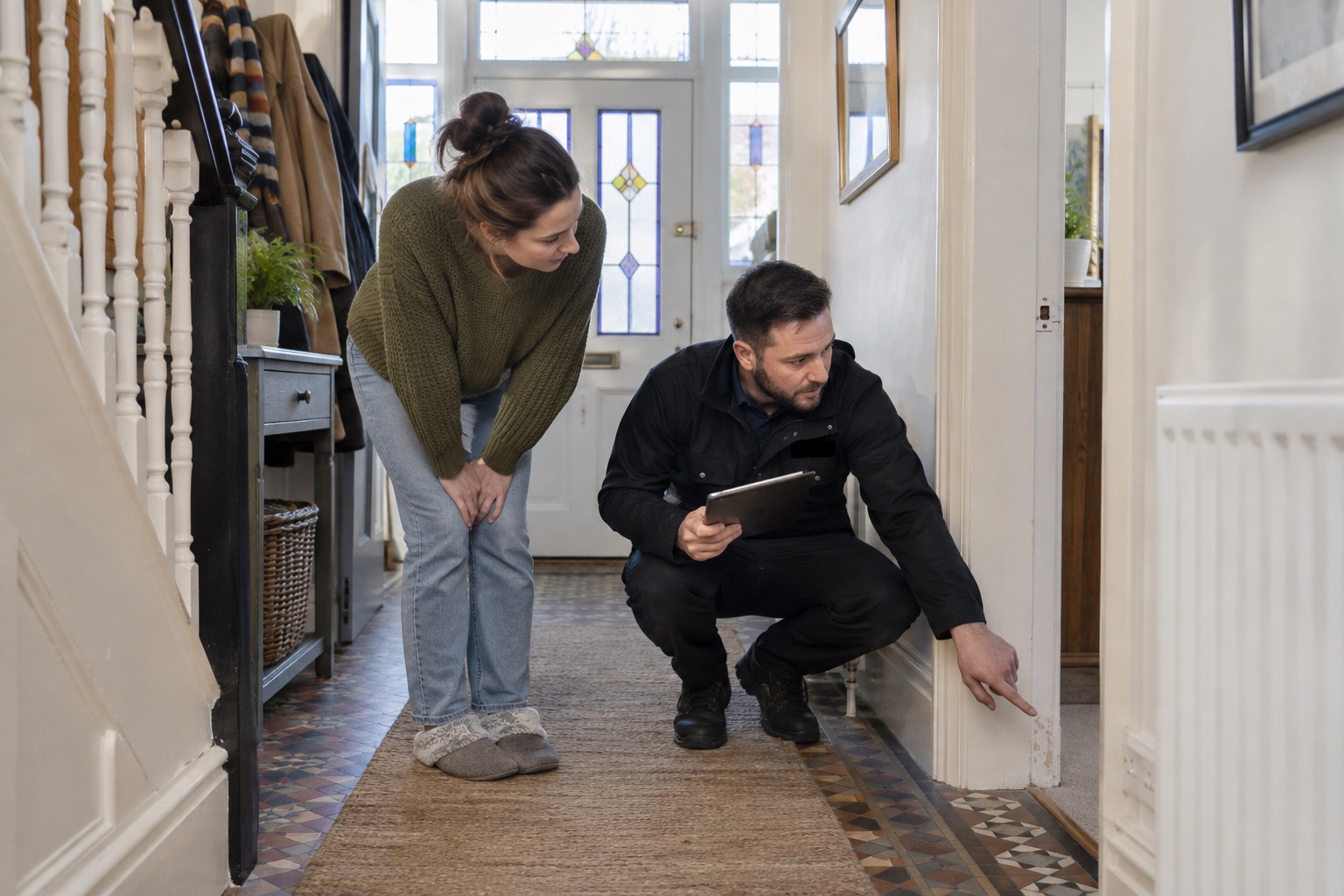
An unfamiliar sound, mark or damaged packet can make a home feel uncertain. A useful first response is to write down exactly what was observed, where it appeared and when. That gives a technician something more reliable than a guessed diagnosis.
What evidence helps?
A photograph of an insect, clear damage or an accessible entry gap can be useful. Keep separate notes for sounds, droppings, marks and actual sightings; one clue may have several explanations. Avoid touching unknown droppings or disturbed nesting material.
What can you do now?
Check food storage and accessible edges without pulling rooms apart. Do not move suspect belongings between rooms or apply several shop-bought products before the problem is identified. Mention children, pets and earlier treatments when you enquire.
Details worth including in your enquiry
- The room and exact place where the first sign appeared
- Whether a clear photo or specimen is available
- Any product or repair already tried
Describe observations in your own words and tell us about any treatment already used. Photos can be useful, but there is no need to take a risky close-up, handle droppings or disturb a nest. If a landlord, tenant or manager needs to provide access, say who can coordinate that before a visit is discussed.
Agreeing a useful next step
Ask whether an inspection is the appropriate first visit, which rooms or outside areas need access, and what the quotation includes. The team can explain a property-specific plan after considering the evidence.
Before agreeing work, ask for the proposed area and method, any preparation or temporary exclusion, the number of visits, the full price and what would lead to a follow-up. Product-specific written instructions take priority over a general article. Sending an enquiry or naming a preferred day does not make a booking.
A common question
Does one mark prove there is an infestation?
No. A single mark is a reason to investigate, not a reliable identification on its own.