
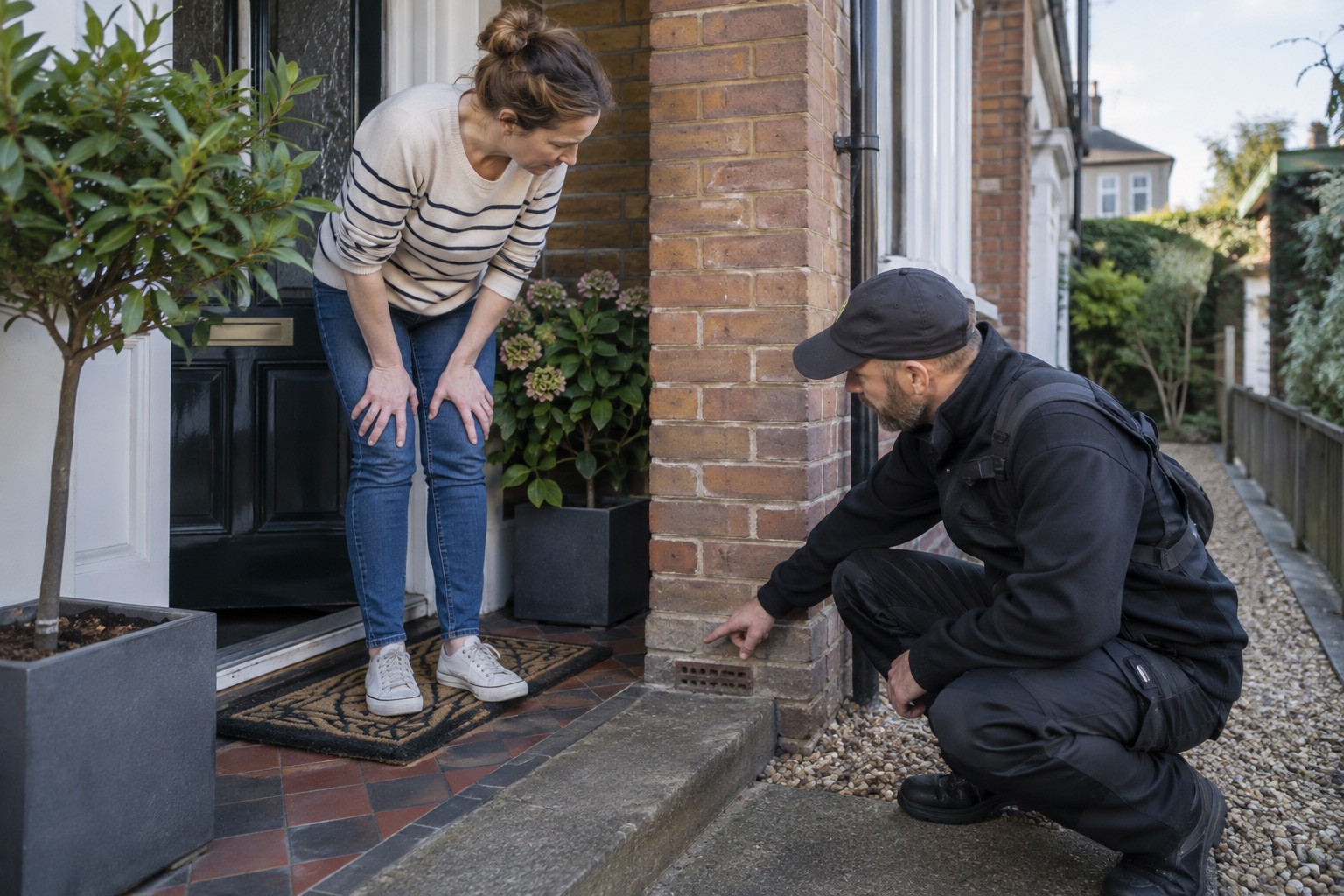
A neighbour’s treatment history can be useful context, but it cannot diagnose your property or explain every new sighting. The species, access routes and work completed in each space all matter.
What evidence helps?
Keep a short timeline of your own sightings, rooms and physical clues. If a building manager is coordinating reports, ask them to record each property separately rather than merge several uncertain accounts.
What can you do now?
Do not copy a neighbour’s product or preparation instructions. A treatment for one unit may not be suitable for another, and shared access can require an agreed building-level plan.
Details worth including in your enquiry
- Your own dated evidence, separate from neighbours’ reports
- Any shared spaces needing manager access
- The terms of any earlier treatment
Describe observations in your own words and tell us about any treatment already used. Photos can be useful, but there is no need to take a risky close-up, handle droppings or disturb a nest. If a landlord, tenant or manager needs to provide access, say who can coordinate that before a visit is discussed.
Agreeing a useful next step
Ask what the new inspection covers, what remains unknown and how any shared route will be addressed. A follow-up should respond to current evidence, not just repeat the previous treatment.
Before agreeing work, ask for the proposed area and method, any preparation or temporary exclusion, the number of visits, the full price and what would lead to a follow-up. Product-specific written instructions take priority over a general article. Sending an enquiry or naming a preferred day does not make a booking.
A common question
Is a neighbour responsible for a new sighting?
A sighting alone does not establish the source or responsibility.