
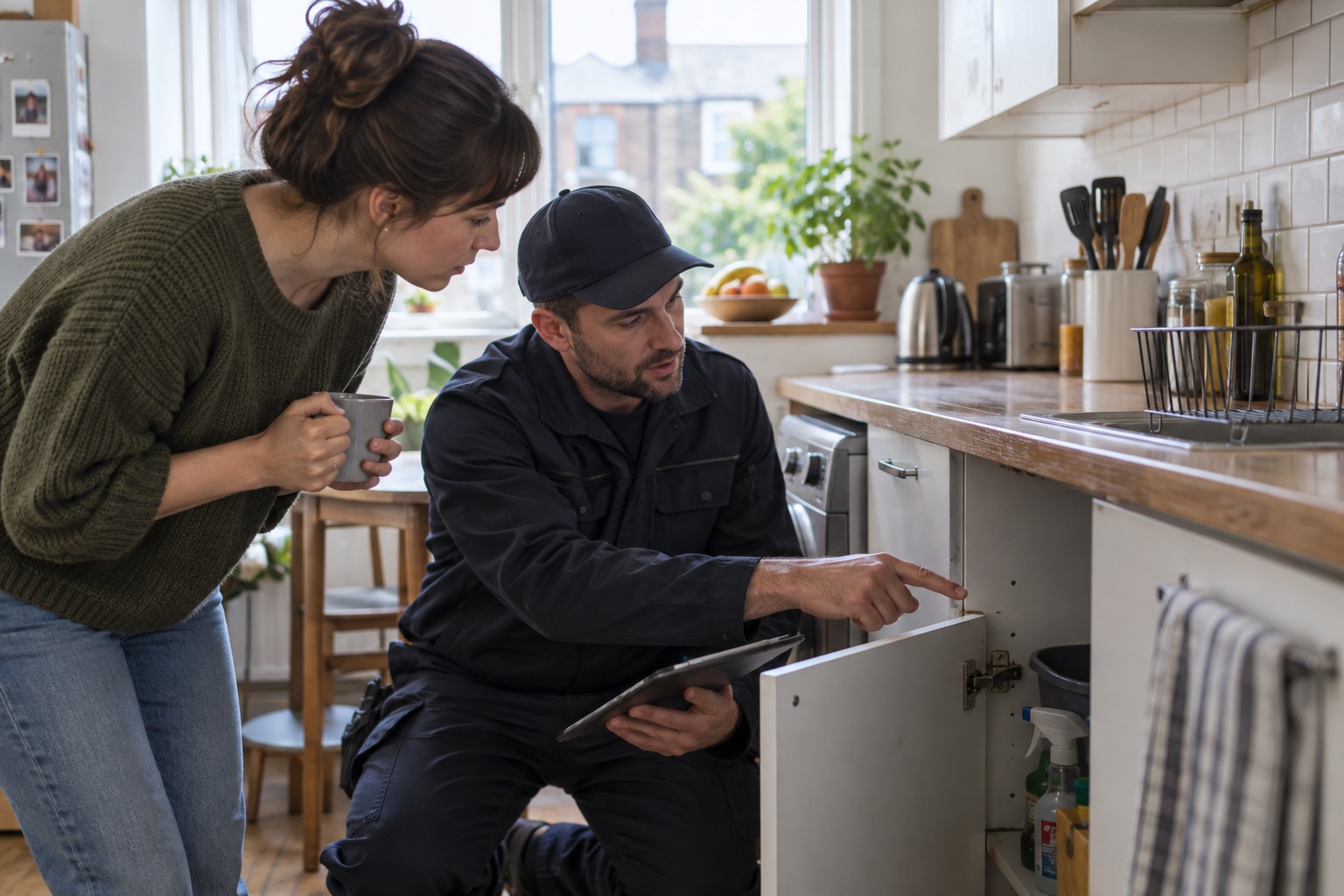
A report from one resident or worker in a shared kitchen should be recorded precisely. Different cupboards, appliances and waste areas may need different access, and one sighting should not be stretched into an assumed building-wide problem.
What evidence helps?
Ask where the insect was seen, at what time and whether a photograph exists. Note any prior products or cleaning changes. Keep each report attached to its own room or unit.
What can you do now?
Agree one contact for access and written instructions. Avoid applying a spray in food-preparation areas or asking occupants to move belongings before the team has explained the inspection.
Details worth including in your enquiry
- A separate record for each kitchen or unit
- One agreed contact for access and aftercare
- Monitoring and follow-up arrangements
Describe observations in your own words and tell us about any treatment already used. Photos can be useful, but there is no need to take a risky close-up, handle droppings or disturb a nest. If a landlord, tenant or manager needs to provide access, say who can coordinate that before a visit is discussed.
Agreeing a useful next step
Ask how identification, treatment, monitoring and follow-up will be coordinated across relevant spaces. The quotation should define the actual scope and responsibilities.
Before agreeing work, ask for the proposed area and method, any preparation or temporary exclusion, the number of visits, the full price and what would lead to a follow-up. Product-specific written instructions take priority over a general article. Sending an enquiry or naming a preferred day does not make a booking.
A common question
Should every unit be treated because one kitchen had a sighting?
No automatic conclusion follows; assess the evidence and building layout first.