
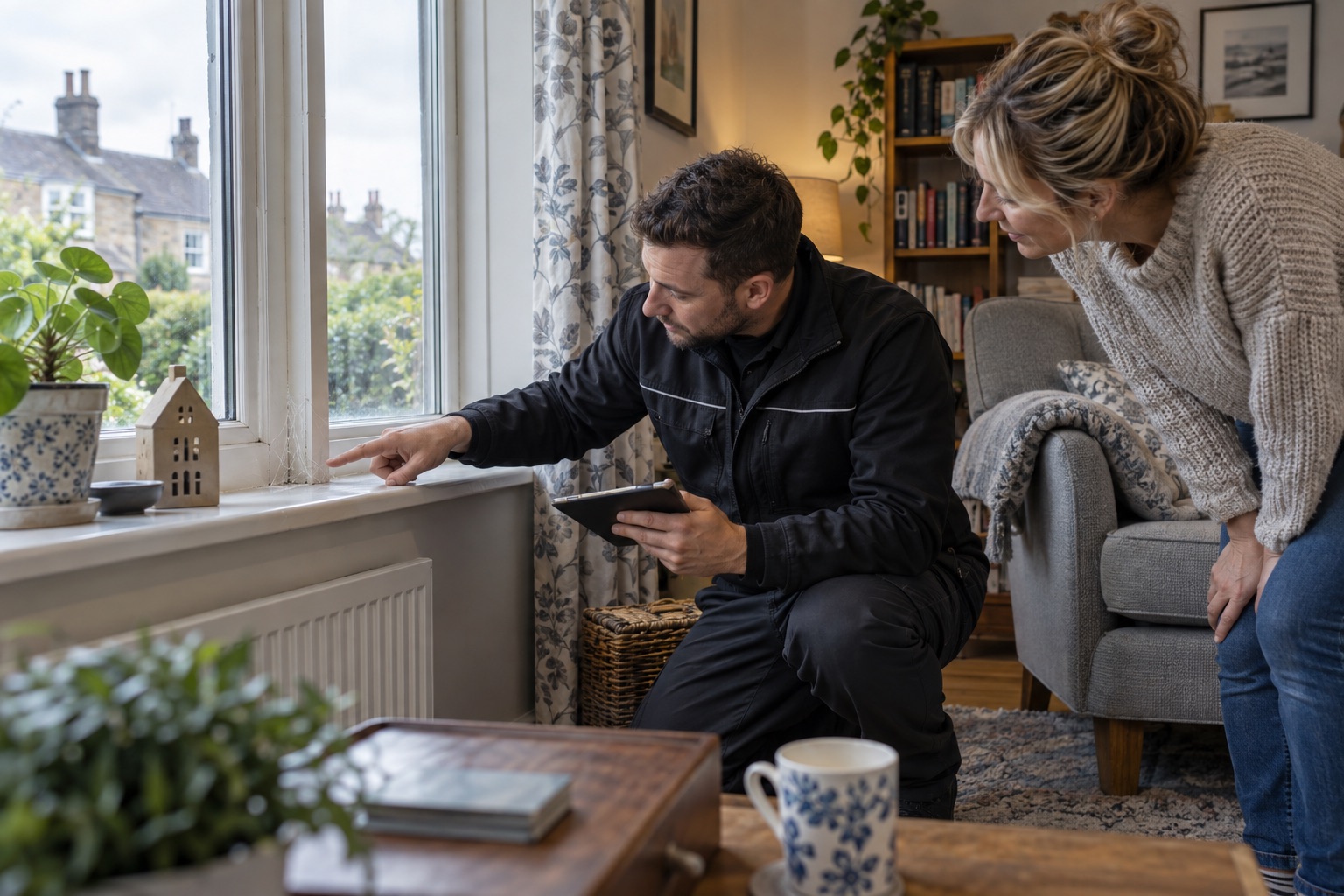
Seeing a spider indoors does not establish an infestation. Many household spiders enter or become visible without a persistent problem. If sightings are frequent or concentrated in one area, note the location and the conditions around it.
What evidence helps?
Record whether you are seeing spiders, webs, or other insects that may be drawing them to a particular space. Clear photographs can help with identification, though an image may not show the whole situation.
What can you do now?
Remove webs where accessible, reduce clutter that blocks inspection and check window screens or gaps that can be repaired safely. Avoid spraying a room simply because a spider appeared; a treatment decision should follow a clear objective.
Details worth including in your enquiry
- The number and location of repeated spider sightings
- Whether webs or other insects are also present
- The specific nuisance you want addressed
Describe observations in your own words and tell us about any treatment already used. Photos can be useful, but there is no need to take a risky close-up, handle droppings or disturb a nest. If a landlord, tenant or manager needs to provide access, say who can coordinate that before a visit is discussed.
Agreeing a useful next step
Tell the team what you are seeing and what outcome you want. They can advise whether pest control is warranted or whether basic exclusion and housekeeping are the useful first steps.
Before agreeing work, ask for the proposed area and method, any preparation or temporary exclusion, the number of visits, the full price and what would lead to a follow-up. Product-specific written instructions take priority over a general article. Sending an enquiry or naming a preferred day does not make a booking.
A common question
Should every spider be treated?
No. The species, number, location and actual concern matter more than a single sighting.