
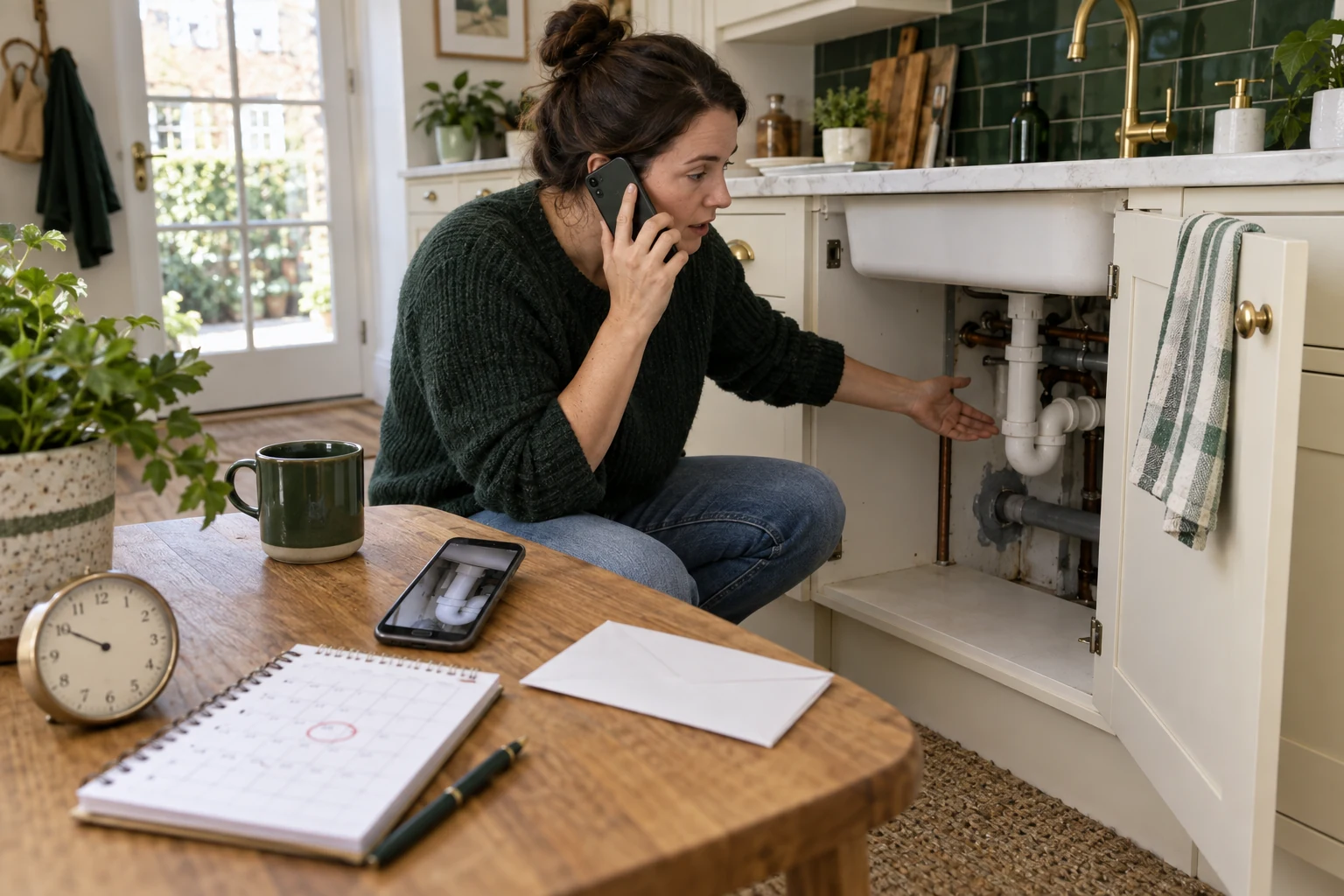
You do not need to identify the pest before calling. The most useful opening is the postcode and property type, followed by what you saw or heard, the exact place, when it began and whether anyone has already moved items, repaired a gap or used a product.
Describe the event, not your certainty
Say “small dark insect beside the mattress seam” rather than “definitely bed bugs”, or “scratching above the kitchen after midnight” rather than choosing mice or rats. Give size with an everyday comparison, frequency and direction of movement. If a photograph or contained specimen exists, mention it; do not create one by climbing, handling droppings or entering a void.
A short timeline often resolves the first questions: first observation, most recent observation, rooms involved and changes between them. For a flat or business, say whether the route may cross a shared hallway, service riser, stockroom or neighbouring unit.
Explain the property and access
State whether the home is detached, terraced, a converted flat or part of a managed block. Mention loft hatches, locked cupboards, tenants, concierge arrangements, opening hours and parking restrictions only when they affect inspection. Identify the person who can authorise access or work; a caller who cannot open the affected room should say so at once.
Mention children, pets, fish, birds, reptiles, pregnancy, allergies or other relevant vulnerability without supplying private clinical detail. These facts help the company plan questions and written instructions. Medical and veterinary advice remains with the appropriate professional.
List previous action accurately
Read the name from any product label and say where and when it was used. Do not guess the active ingredient. Report traps, cleaning, discarded furniture and sealed holes because each can change evidence or access. If another contractor visited, have the report available rather than paraphrasing a treatment you did not see.
Before agreeing a visit, ask what areas are included, what should remain undisturbed, who must be present, what the written report contains and which costs or follow-ups require confirmation. A useful first call establishes the next step; it does not need to settle species, price and treatment in one conversation.
Call 0203 393 2338. The booking page is available for context, but calling first allows the team to ask about evidence and access.
Frequently asked questions
What if I have no photograph?
A precise location and timeline are still useful. Do not take risks merely to obtain an image.
Should I clean before calling?
Keep normal hygiene, but ask before deep cleaning, moving furniture or removing all signs when identification is uncertain.
Can I get a firm price from the first sentence?
The company needs to confirm the problem, property and scope. Ask what the quote includes and which facts could change it.
Sources and further reading
External references may contain pest or skin photographs.