
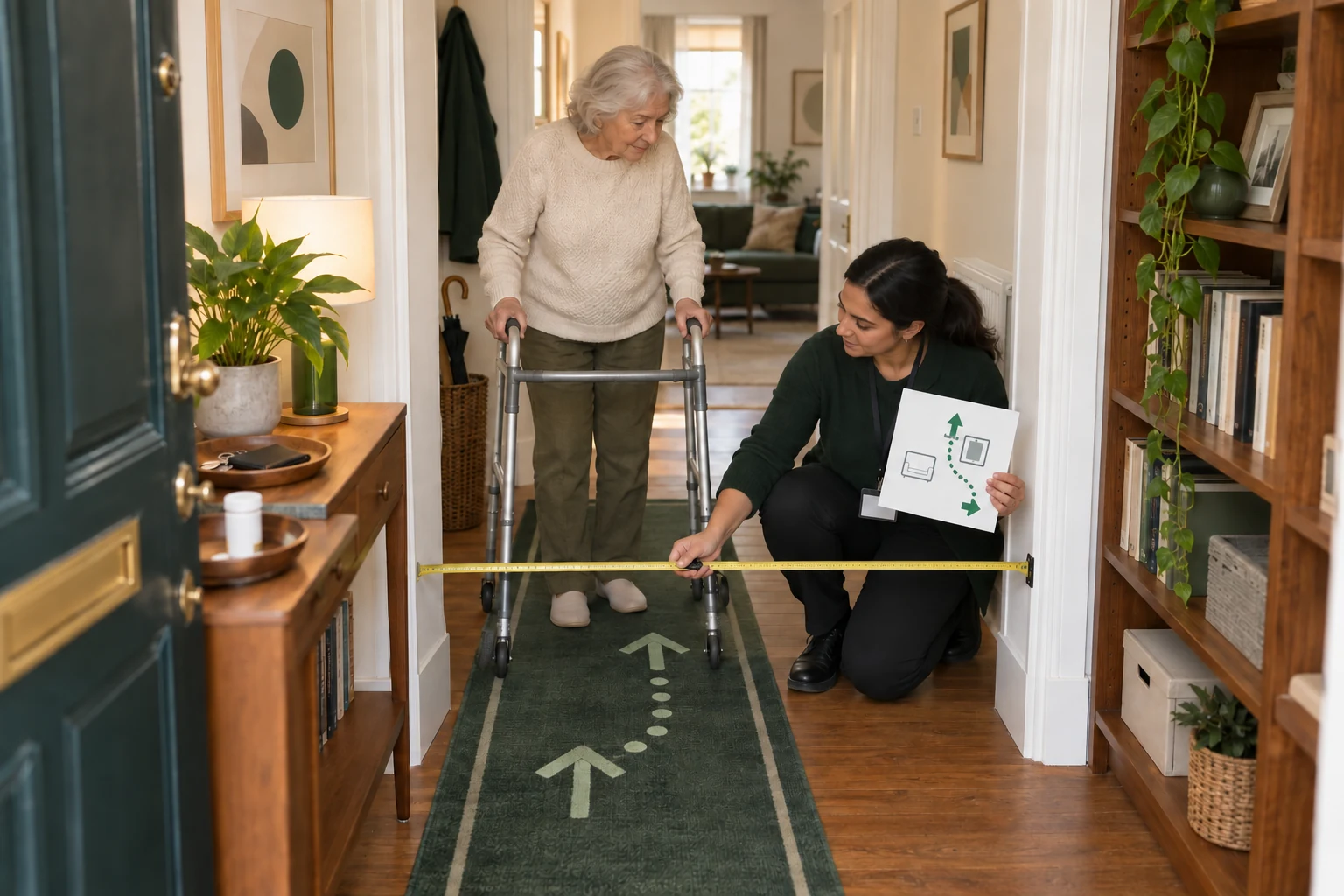
Tell the service about access difficulties before the appointment. Describe the barrier, the area that needs attention and the help already available; do not promise unsafe lifting, climbing or furniture removal. The visit can then be scoped around the person and property rather than failing at the door.
Describe access from street to inspection area
Start outside: parking or loading limits, gates, intercoms, steps and shared entrances. Continue through the property: lift size, narrow passages, stairs, floor coverings, locked rooms and pets. Finally describe the target area, including heavy furniture, fitted units, loft hatches or stored belongings.
Say who can grant entry and whether another person needs to attend. Mention hearing, sight, language or communication needs and whether advance arrival contact helps. These details should be handled respectfully and shared only with people arranging the visit.
Avoid vague statements such as “the room is cluttered”. A photograph or simple description can show that only one side of the bed is accessible, the wardrobe is fixed and the resident cannot lift drawers. That allows the technician to decide what can be inspected first and whether practical assistance or a second stage is needed.
Ask which access is essential
Preparation depends on the evidence and method. Ask which furniture edges, cupboards, service routes or outside areas must be reached and why. Confirm who is responsible for moving heavy or valuable items. A technician should not discover on arrival that a piano, appliance or clinical bed is expected to move.
For pets, explain species, number and normal location. Ask what separation is required only after the method is proposed. For shared entrances or managed buildings, identify notice, keys and escort arrangements. If a neighbour or landlord controls the relevant space, say so early.
Consider a wheelchair user in a compact furnished bedroom. A useful plan might begin with the accessible bed edge and photographs of the blocked side, then decide whether assistance is needed. An instruction to “clear the whole room” would not identify the essential task or who can perform it.
Record the limitation honestly
Some areas may remain uninspected if safe access cannot be created. The report should name them and explain the effect on confidence. That is preferable to implying a complete inspection or pressuring someone into risky preparation.
Confirm the appointment route, arrival contact and written preparation before the day. Keep medicines, mobility equipment and essential belongings usable unless a specific, safe alternative has been agreed.
Call The City Pest Company on 0203 393 2338 to explain the access need before arranging the visit. See the booking page for service context; confirm actual availability and scope by phone.
FAQs
Must I move heavy furniture myself?
No. Explain what cannot be moved safely and ask who needs to provide suitable assistance.
Can an inspection begin with limited access?
Often useful observations can be made, but the report should state what remained unseen and whether another step is required.
Should I send room photographs?
They can help plan access. Exclude people, private documents and security details, and use the company’s agreed sharing route.