
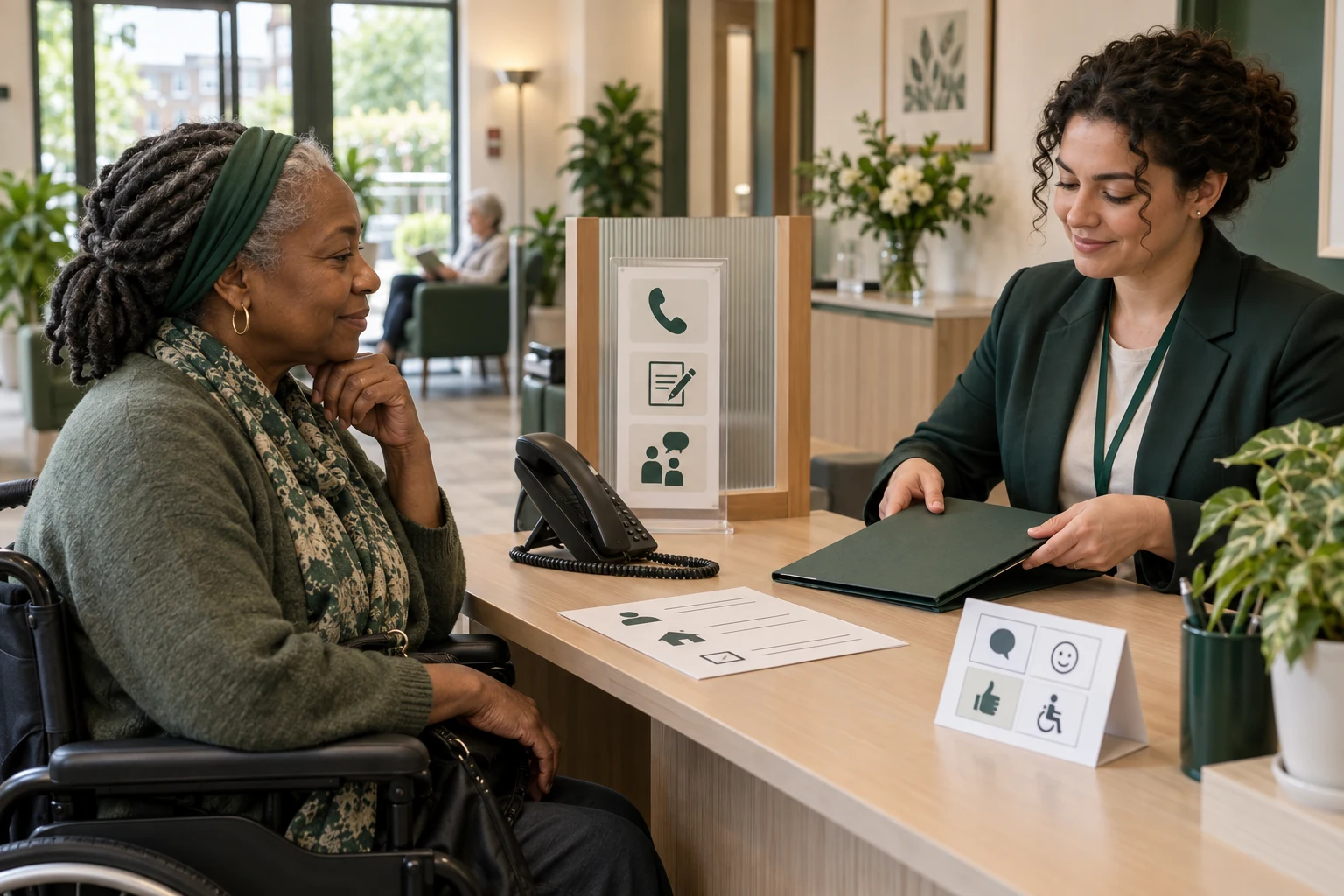
A respectful process asks residents for observable facts, offers an accessible way to report them, explains who will respond and protects private information. It should never require a resident to diagnose the pest, prove immaculate housekeeping or accept blame before help is arranged.
Ask for information that changes the response
Use a short form or phone script: building and room, exact surface, first and most recent observation, frequency, safe photograph or specimen, and anything already moved or treated. Add access needs, pets, children, mobility, language or communication support. Ask only for health information that is genuinely needed for safe planning.
Use neutral wording. “Resident reports two small insects on the bedroom sill” records an observation. “Dirty flat has an infestation” adds judgment and an unsupported diagnosis. Avoid circulating names, skin photographs or pictures containing personal documents.
Not every resident can use an online form. Provide a phone route and explain how a representative or support worker can help. Tell residents what happens after a report, when they should expect acknowledgement and what information the contractor still needs. Attendance times and outcomes should reflect actual arrangements rather than blanket promises.
Coordinate without broadcasting the case
Nominate one case contact. That person combines the report, property history and access plan, then shares only what each participant needs. Reception may need a contractor name and arrival contact; a technician needs the locations and relevant method constraints; neighbours may need access instructions without knowing who first reported the issue.
Imagine a report from one flat followed by a request to inspect a shared riser. A block-wide message can say that access is needed for a building-services and pest inspection. It does not need to identify the resident or declare the source.
Keep a dated record of contact attempts, consent or notice, visits, findings and actions. If access does not occur, record why without labelling the resident uncooperative. Offer a realistic alternative where possible. Separate pest evidence from repairs and from any tenancy or legal process.
Close the feedback loop
After inspection, give the resident clear instructions for their room and explain which actions belong to management or another trade. Avoid forwarding technical product sheets without a plain-language summary of what the person must do. Provide a route to report a change or an access problem.
Managers should review patterns without turning report volume into a league table of residents. Repeated concerns in a service riser, bin store or adjoining flats can point to a property-level issue even where each initial report was uncertain.
For help planning a multi-property enquiry, call The City Pest Company on 0203 393 2338. See pest control for landlords and agents for service context.
FAQs
Should anonymous reports be ignored?
No. Record what can be checked, while explaining that direct contact may be needed for access or clarification.
Can a manager ask for photographs?
Yes, where useful and safe, with clear instructions to exclude faces, private documents and skin images.
Who decides whether a resident is responsible?
The pest report should not make that legal or contractual decision. Keep observations and management processes separate.
Should all residents be told about every report?
Share the information necessary for access, safety and action. Avoid unnecessary personal detail or unconfirmed claims.