
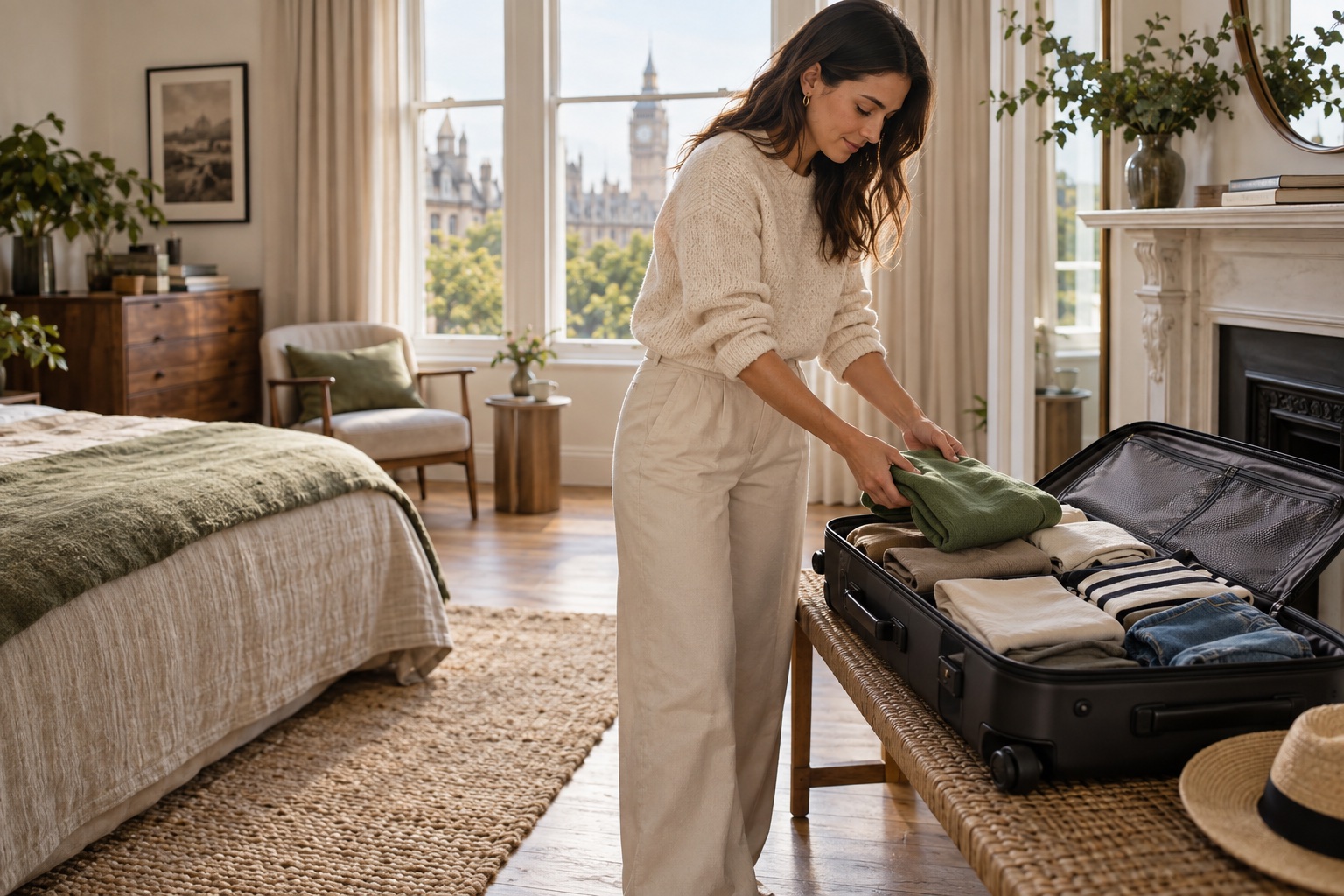
A sensible routine after travel is brief: unpack in a controlled area, keep luggage away from beds and upholstered seating while you check it, deal with clothes according to their care labels, and store the case clean and dry. A trip does not mean you have brought bed bugs home, and prevention cannot remove every risk.
BPCA notes that bed bugs can be transported by chance on luggage and other items. That is a reason for a calm check, not a reason to treat the home automatically.
Choose one place to unpack
Before opening the case, choose a well-lit area where belongings can be handled without spreading them across several rooms. Keep the luggage off beds and sofas. A hard floor or clear utility area may make a visual check easier, but use a location that is safe and practical for your home.
If you live in a small flat, you do not need a special quarantine room. Work through one bag at a time, keep unchecked and checked items separate, and avoid creating a pile that blocks access or becomes impossible to manage.
Inspect without turning it into an ordeal
Look at accessible seams, pockets, zips and folds. You are checking for unexpected physical signs, not trying to dismantle the case or prove an infestation. The NHS lists bed bugs and small spotting among possible signs around affected items and furniture, but another mark or insect may have a different cause.
Good light is more useful than repeated close-up searching. Do not expose yourself to upsetting pest photographs just to compare every speck. If something is found, record where it was and ask for a secure image-sharing route or professional assessment.
Handle clothes according to the item and real advice
Separate clothes that need laundering from clean items, but do not apply a single high-temperature rule to every fabric. Read care labels. Delicate materials, shoes, electronics, medicines and toiletries may be damaged by heat, cold, moisture or chemicals.
If there is a specific concern, contact a pest professional before choosing a process. Ask which items need action and how they should be contained. Avoid moving open bags repeatedly through bedrooms while you decide.
Do not spray luggage with a household pesticide as a routine precaution. The Health and Safety Executive says biocides must be suitable for the intended use and their labels followed. A product approved for one surface or target cannot be assumed suitable for suitcases, clothes or sleeping areas.
Clean and store the case sensibly
When no concerning evidence is found, clean the case in a way suitable for its material and let it dry. Store it away from sleeping areas where practical. Sealed storage can help keep rarely used belongings organised, but it is not a guarantee against bed bugs and should not turn into permanent alarm-driven containment.
If you found a suspect sign, avoid putting the case into a loft, shared store or another home before getting advice. Label any temporary containment clearly so another household member does not reopen or move it unknowingly.
Check the room as part of ordinary housekeeping
Over the following days, stay aware of physical signs around the normal sleeping area without changing bedrooms solely out of worry. Skin marks alone cannot confirm bed bugs. If you find a relevant sign, make a note of the date and location rather than repeatedly treating the room.
Your record might include:
- destination and return date;
- which luggage and rooms are involved;
- a description of the sign and exact location;
- whether any second-hand items also entered the home;
- products already used, if any.
That gives a professional a much clearer starting point than a list of bite patterns.
Build a routine you can actually repeat
The best routine is proportionate. Keep luggage off the bed, unpack methodically, follow clothing labels and store the case tidily. There is no need to discard a sound suitcase after every journey or treat a room without evidence.
For future trips, a few simple habits can make the return easier: pack items in organised groups, avoid putting an open suitcase on upholstered furniture, and know where you will unpack at home. None of these habits can promise prevention; they simply reduce confusion if a concern arises.
If you have found a possible sign, read bed-bug signs and next steps or call 0203 393 2338. The team can discuss what you noticed without requiring you to look at pest imagery.
Common questions
Should I leave my suitcase outdoors?
Not automatically. Weather, security and shared access may make that unsafe or impractical. Choose a controlled indoor handling area and ask for advice if evidence is present.
Should all travel clothes be treated at one temperature?
No universal instruction is given here. Follow care labels and obtain method-specific advice where there is a real concern.
Do bites after a holiday prove bed bugs travelled home?
No. Skin marks have multiple possible causes and are not enough to confirm the pest or source.
Sources and further reading
External references may contain pest or skin photographs.