
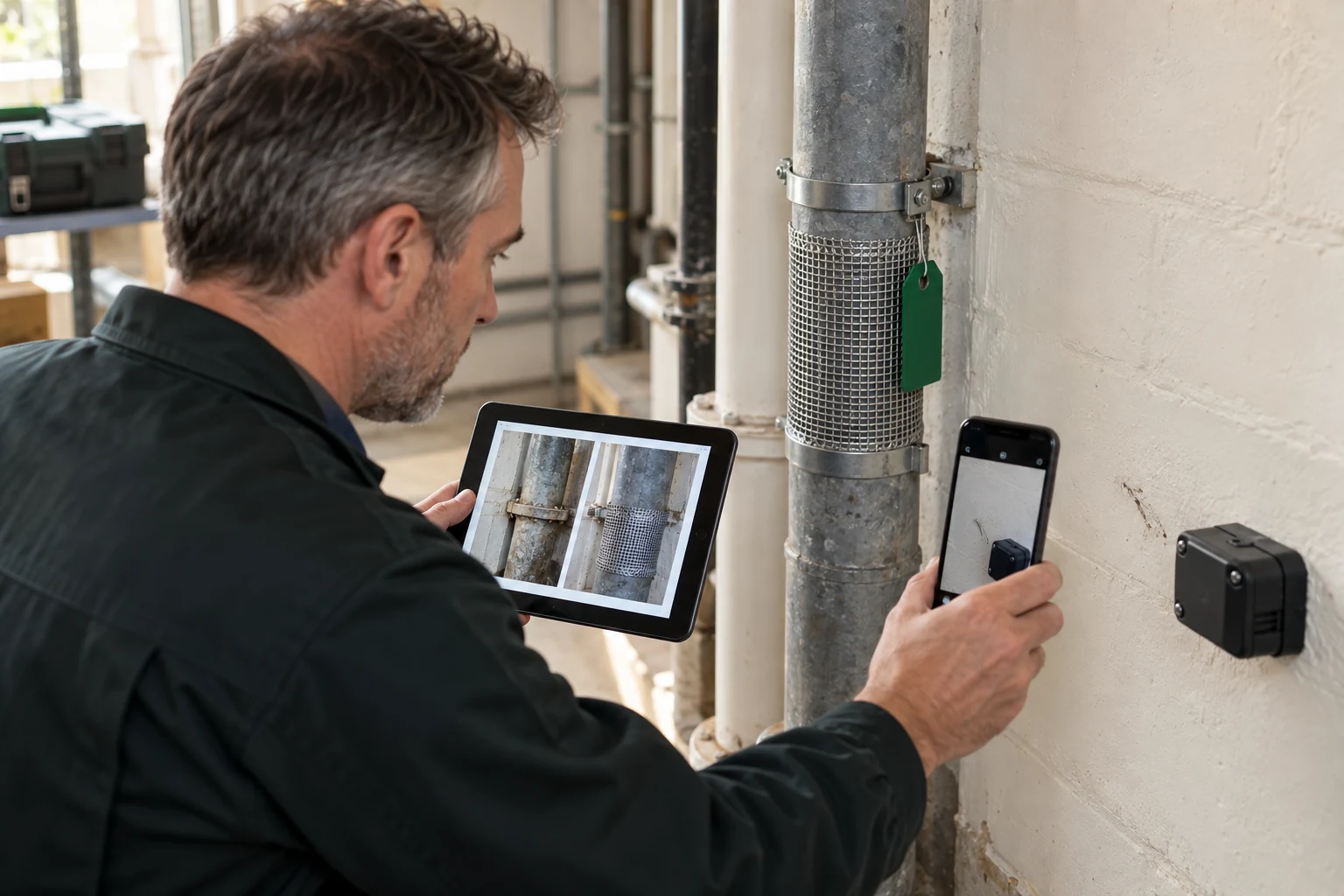
After rodent proofing, compare new observations with the original route and repair record. Note exact dates and locations, keep monitoring devices undisturbed, and report new damage or activity nearby. A quiet period is encouraging, but it is not a promise of permanent exclusion.
Keep the completion record
Retain dated photographs of the repair, the technician’s report and any inaccessible areas. The record should identify what was closed, the material or trade involved and whether monitoring or a return visit was agreed. Without that baseline, later noise in the same room may be wrongly attributed to the repair.
When something changes, write down the room, surface and time. Distinguish sound from sighting, damage or droppings, and do not handle suspect material. Photograph new gnawing or a damaged repair from a safe position. Note building work, deliveries, leaks or movement in neighbouring areas that occurred after proofing.
Suppose scratching stops near a boxed pipe but begins beside a kitchen kickboard. Report the second location and its timing. That pattern could involve a different route, activity already within the building or another cause; it does not by itself show that the first repair failed.
Protect the monitoring plan
Leave traps, bait stations and monitors where the professional placed them. Do not cover, open or relocate them, and keep children and pets away as instructed. If a device is damaged or becomes accessible, contact the provider rather than repairing it yourself.
Continue normal hygiene and waste routines, but follow any written directions about treated or monitored areas. Avoid sealing another gap while activity remains uncertain. A new closure can redirect movement or make evidence harder to interpret.
Use the agreed review date, then report earlier if there is fresh damage, repeated sightings, activity in a sensitive space or a safety concern. The follow-up should compare evidence, inspect accessible repair edges and decide whether adjacent routes or another professional discipline need attention.
Understand the limit of proofing
Proofing addresses opportunities identified and accessible at the time. Concealed routes, shared services, neighbouring property, wear and later alterations remain limits. A repair can be well completed even when another route is found later.
The final record should state whether the repair remained intact, what new evidence was observed and what happens next. Avoid labels such as “all clear” unless the provider defines what that conclusion covers.
Call The City Pest Company on 0203 393 2338 with the original repair location and your dated observations. See the rat service page for service context.
FAQs
How long should I monitor?
Follow the period agreed for the pest, method and property. There is no useful universal timetable for every repair.
Should I clean away droppings immediately?
Keep away from suspect material and ask for safe, situation-specific advice. Record the location without handling it.
Does new activity prove poor workmanship?
No. It can reflect several possibilities, including another route or activity already inside. Compare evidence before assigning a cause.
Sources and further reading
External references may contain pest or skin photographs.