
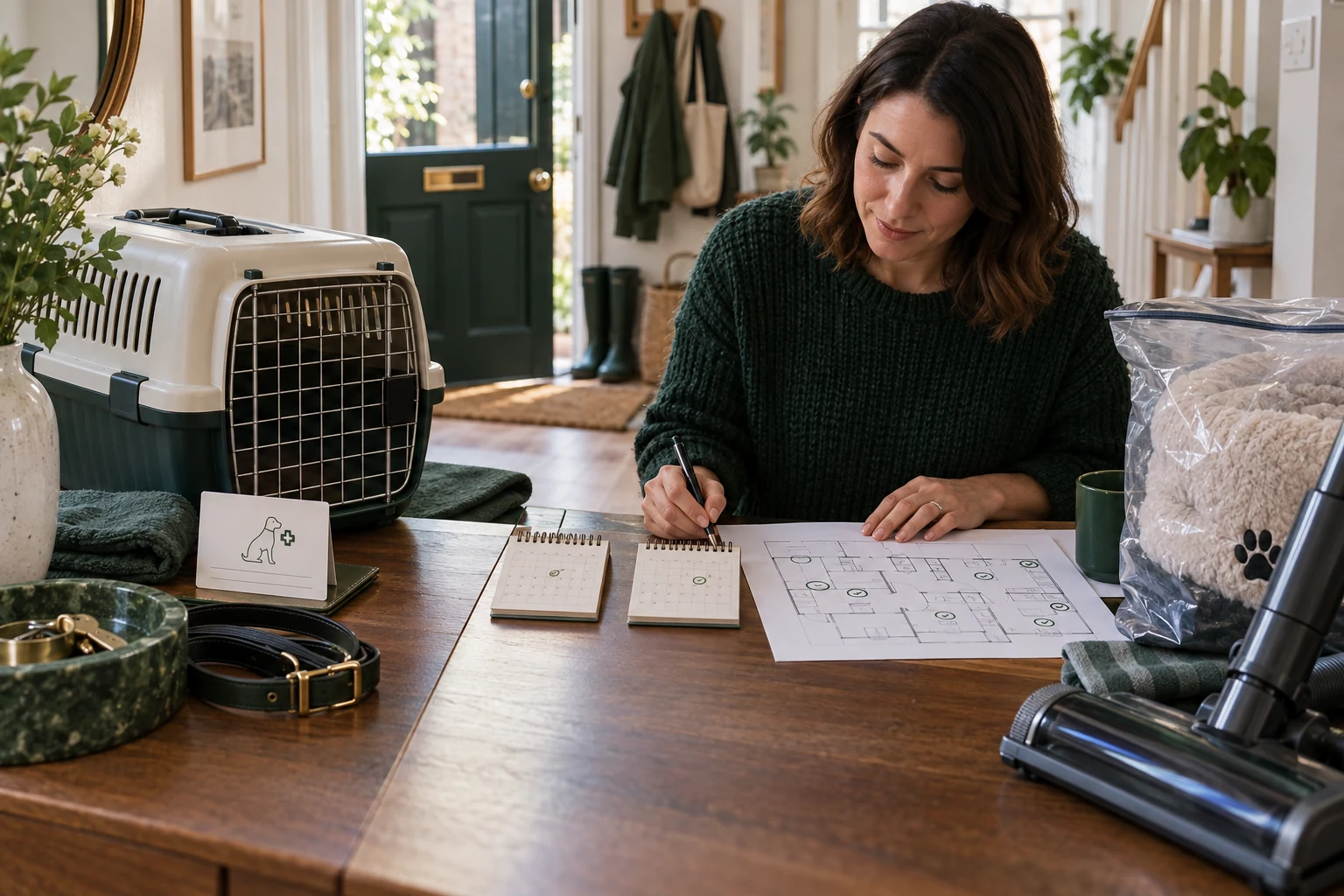
Treat the animal and the premises as two coordinated jobs with different professional owners. A vet examines the animal and recommends veterinary products; a pest professional assesses floors, furnishings and rooms. Share dates and observations so neither plan assumes the other has happened.
Give the vet the animal evidence
Report scratching, grooming changes and any insects or specks found in fur. Tell the vet about every animal species and products already used. BPCA warns that products suitable for dogs may be toxic to cats and says animal treatments should be recommended by a vet.
Give the pest controller the room pattern
Map pet beds, favourite chairs, carpets, floor edges and rooms where jumping insects were seen. Include visiting or previous animals. Skin marks alone do not confirm fleas, so retain a safely contained specimen when possible.
Ask which floor areas and furnishings need access, what to vacuum or wash, and what must remain undisturbed afterwards. Instructions depend on the authorised product or method. Never apply a premises product to an animal.
Synchronise the dates
Record veterinary treatment and property visits on one timeline without swapping instructions between them. Ask what observation triggers follow-up and who should receive it. If an animal cannot leave or an aquarium cannot be moved, say so before the property visit.
Call 0203 393 2338, or read the flea service page.
Frequently asked questions
Can the pest controller prescribe pet treatment?
No. Veterinary care belongs with a vet.
Is treating the pet enough?
The property may need assessment; equally, premises work does not replace animal care.
May I use the same insecticide on bedding and fur?
Never assume so. Use each authorised product only as labelled.
Sources and further reading
External references may contain pest or skin photographs.