
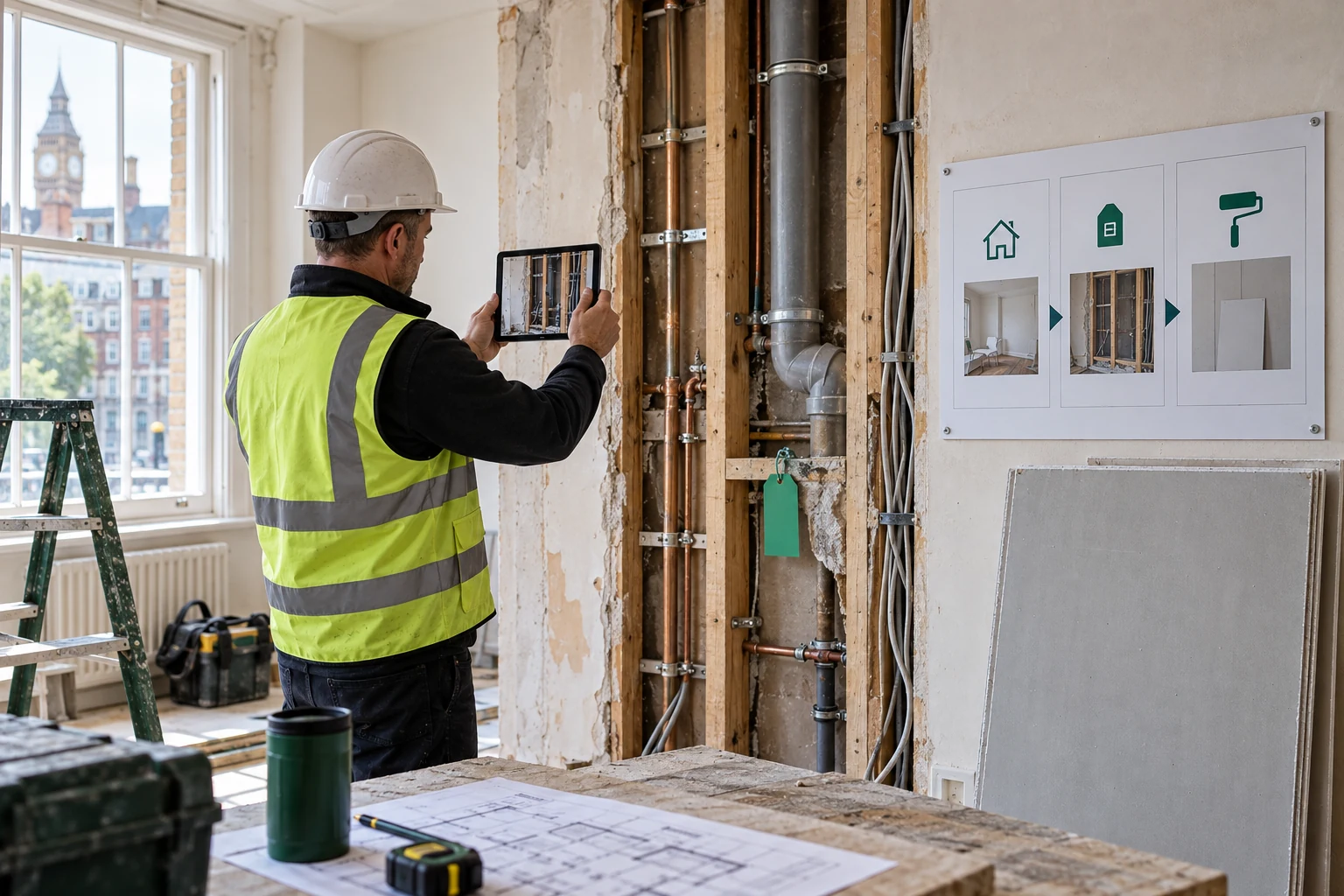
Put pest checks at the points when the building reveals new information: before strip-out, while voids and service routes are open, and before finishes conceal them again. Give one person responsibility for recording findings and closing actions. This turns pest prevention into part of the works sequence rather than a hurried check at handover.
Why the programme changes the inspection
Refurbishment can expose routes that are normally hidden behind cupboards, boxing, ceilings and floor finishes. It can also create temporary openings, relocate waste, interrupt cleaning routines and leave doors open for deliveries. None of these automatically means there is an infestation, but they change what can be observed and where prevention needs coordination.
Begin with a pre-start walk-through. Mark existing pest reports, previous repairs, incoming utilities, drainage concerns, loading routes, bin storage and spaces that will become inaccessible. Record the condition with dated photographs. If contractors later find droppings, gnawing, nesting material or an unexplained opening, the team can compare it with a baseline instead of arguing about when it appeared.
The inspection brief should match the construction sequence. A ceiling void visible for one day may be the best chance to trace a service route; a newly formed kitchen plinth may conceal it the next morning. Add hold points to the programme where a short inspection or photograph is needed before closing. This does not mean pest control should delay every task. It means the project manager identifies the few stages where lost access would be costly.
Coordinate trades around the same route
Pest entry often intersects with work owned by several trades: a builder forms the opening, a mechanical contractor installs the pipe, a fire-stopping contractor completes the penetration and a decorator finishes the surface. A note saying “seal hole” is too vague. The action should identify the exact location, the required building performance, the responsible trade, the target date and who will verify completion.
Do not ask a pest contractor to approve structural, fire, ventilation or electrical work outside their competence. Equally, do not let a cosmetic finish hide an unresolved access route. The relevant specialist should specify a compliant repair, while the pest record explains why the route needs attention and whether further evidence remains.
Imagine a café refurbishment where units have been removed from a party wall. The open wall reveals pipe gaps and old debris, while the replacement joinery arrives in two days. A useful plan records the gaps, arranges cleaning and competent repairs, checks the area before the units return, and adds the result to the handover file. Spraying the exposed wall without identification or a defined purpose would not complete those tasks.
Manage products and temporary controls
If monitoring devices, traps or biocidal products are used during works, put them on the site plan and protect them from disturbance by trades. Record who can move them and how damage or access problems are reported. HSE says biocidal products must be suitable for the intended use and their labels must be followed; restrictions can cover users, locations, access, storage and disposal. Site housekeeping is not a substitute for those instructions.
Temporary measures need an end point. Before occupation, account for devices, remove construction waste, reinstate routine waste storage and check that doors, vents, thresholds and service penetrations match the agreed finish. Transfer any continuing monitoring or repair actions to the building manager rather than leaving them in a contractor’s email chain.
Information to put in the handover
The final record should show the areas inspected, dates, observable findings, photographs, actions completed, unresolved limitations and the next review. Separate confirmed pest evidence from possible access routes. If an area could not be opened or safely reached, state that plainly so the absence of a finding is not mistaken for an all-clear.
When to call
Bring a pest professional into the planning conversation when the project affects known activity, shared service routes, food areas, waste handling or large concealed voids. For a discussion about maintenance and inspection planning, call The City Pest Company on 0203 393 2338 or see the maintenance contracts page. The appropriate scope depends on the site, programme and access.
FAQs
When should the first pest check happen?
Before work changes the evidence or access. A pre-start record makes later findings easier to interpret and helps place useful hold points in the programme.
Who should seal service penetrations?
The responsible competent trade should specify and complete work that meets the building’s fire, ventilation, structural and service requirements. The pest record can identify the route and verification need.
Does a clean strip-out prove the site is clear?
No. It records what was visible at that stage. Concealed and inaccessible areas should remain stated as limitations.
Should pest products be left in place during all works?
Only under a defined plan that identifies their purpose, position, restrictions and responsible person. Products and devices can be disturbed by construction activity, so their status must be tracked.
Sources and further reading
External references may contain pest or skin photographs.