
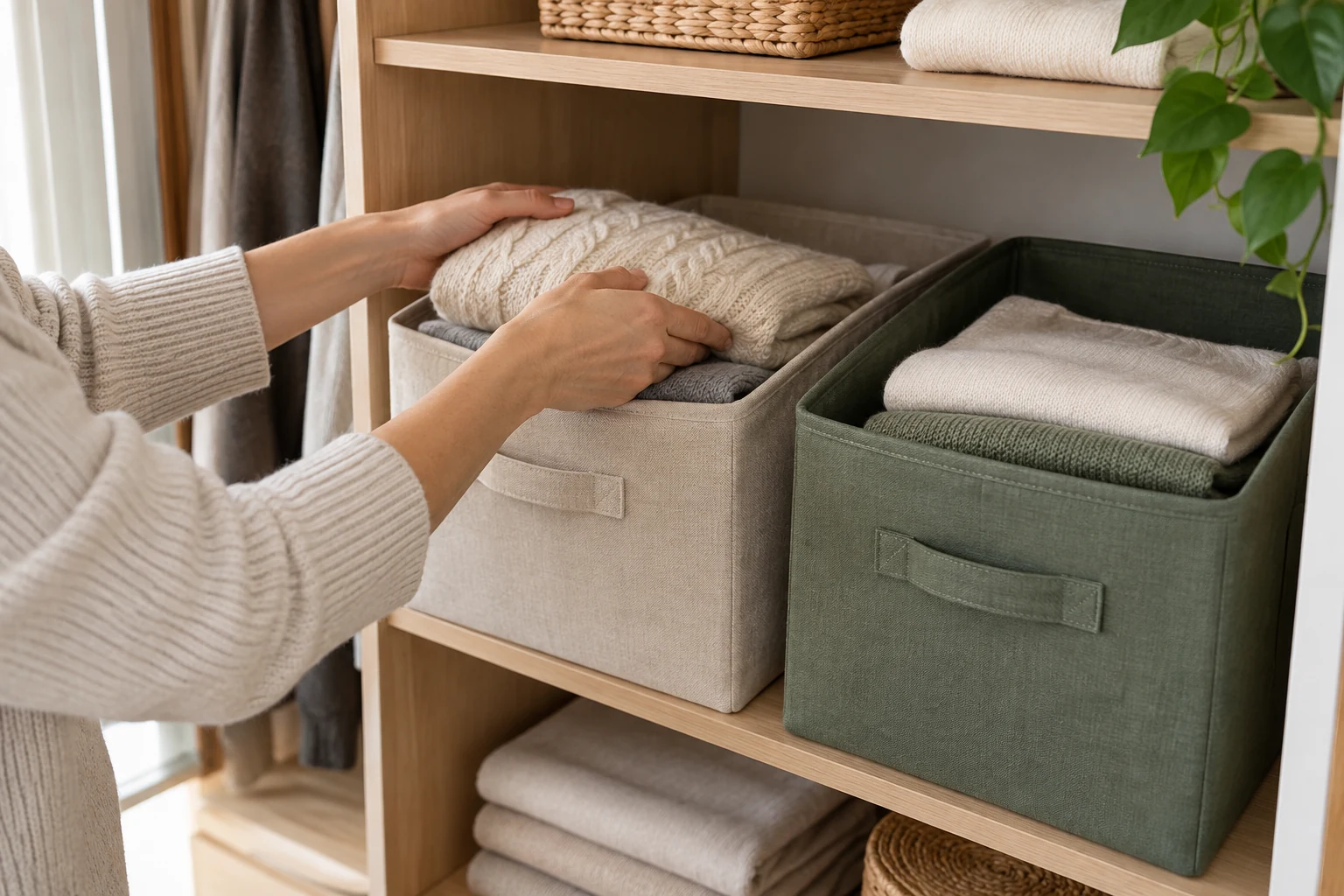
Store seasonal clothing only after it has been cleaned as its care label allows, dried fully and checked in good light. Give extra attention to wool, fur, feathers and other animal fibres, then place items in clean containers that can be inspected without unpacking the whole cupboard.
The useful habit is a repeatable changeover routine. It protects garments from more than moths: damp, unnoticed stains, tight packing and unsuitable cleaning can all cause damage during months out of sight.
Sort by material and care instructions
Start with three groups: washable items, pieces needing specialist cleaning, and items that only need inspection and airing. Follow the sewn-in care label rather than a universal pest-control recipe. A wool coat, feather-filled jacket and cotton shirt may sit in the same wardrobe, but they should not automatically receive the same cleaning or storage treatment.
BPCA notes that clothes-moth larvae feed on animal-derived materials including wool, hair, fur and feathers, and may favour material soiled with perspiration or food. That makes cleaning before storage valuable, but it does not justify damaging heat or chemicals. Deal with stains using the garment maker's directions or a textile professional.
As each item is handled, look along seams, cuffs, pockets, linings and folds. Record fresh irregular holes, loose webbing or small fibre-covered cases. Old damage should be photographed and dated so it is not mistaken for new activity when the clothes return to use.
Prepare the storage place, not only the clothes
Empty one manageable section of the wardrobe, drawer or cupboard at a time. Vacuum accessible edges and crevices, dispose of the vacuum contents appropriately, and check for water marks, condensation or a musty smell. These signs may require building or ventilation advice rather than pest treatment.
Choose containers that are clean, intact and suitable for the fabric. Do not compress structured garments simply to make a lid close. Label each container with its contents and packing date. Clear labels reduce unnecessary opening and make a later check much faster.
Avoid storing clothes beside food, bird seed, pet food or old organic material. A moth found in a mixed storage room can otherwise start two different investigations. Keeping textile and dry-food storage distinct preserves the location clue that helps identify the source.
Build in a mid-season check
Storage should remain inspectable. Leave a clear route to the cupboard and avoid building a wall of unlabelled bags in front of it. Halfway through a long storage period, check the container exterior and a sample of higher-risk items. You are looking for change: new damage, webbing, loose fibres or repeated adult activity nearby.
For a hypothetical shared rental store, that might mean each resident uses a labelled lidded box, while the property manager records the condition of the shelving and room at handover. The record separates damage to a personal garment from a defect such as damp or an unresolved issue in the room.
Scented products and traps should not be treated as proof that everything is protected. If you are considering a biocidal product, HSE says to confirm that it is authorised for the intended use and to follow its label. Never use a professional-only product as a household workaround.
If you find possible activity
Pause the changeover in that section. Keep affected items together, photograph their location and labels, and avoid distributing them among other wardrobes. Do not apply several products or improvise heat treatment; that can damage belongings and obscure the pattern a professional needs to assess.
Call The City Pest Company on 0203 393 2338 with the fibre type, storage location and signs you have found. You can also review the clothes-moth service page. Ask what should remain in place before an inspection and what preparation is appropriate only after the likely source has been assessed.
Frequently asked questions
Must every garment be washed before storage?
Clean garments according to their own labels. Some items require specialist care, and washing a dry-clean-only piece can cause avoidable damage.
Are plastic bags suitable for long-term storage?
Suitability depends on the item, how dry it is and the storage conditions. Use intact containers that protect the contents without forcing or trapping existing moisture, and follow textile-care advice for valuable pieces.
Do cedar or scented sachets guarantee protection?
No. They do not replace cleaning, inspection and an accessible storage plan. Treat any pesticidal claim according to the product's authorised label.
How often should stored clothes be checked?
There is no single interval for every home. A mid-season check is a practical starting point, with earlier attention if adults recur nearby or fresh damage appears.
Sources and further reading
External references may contain pest or skin photographs.