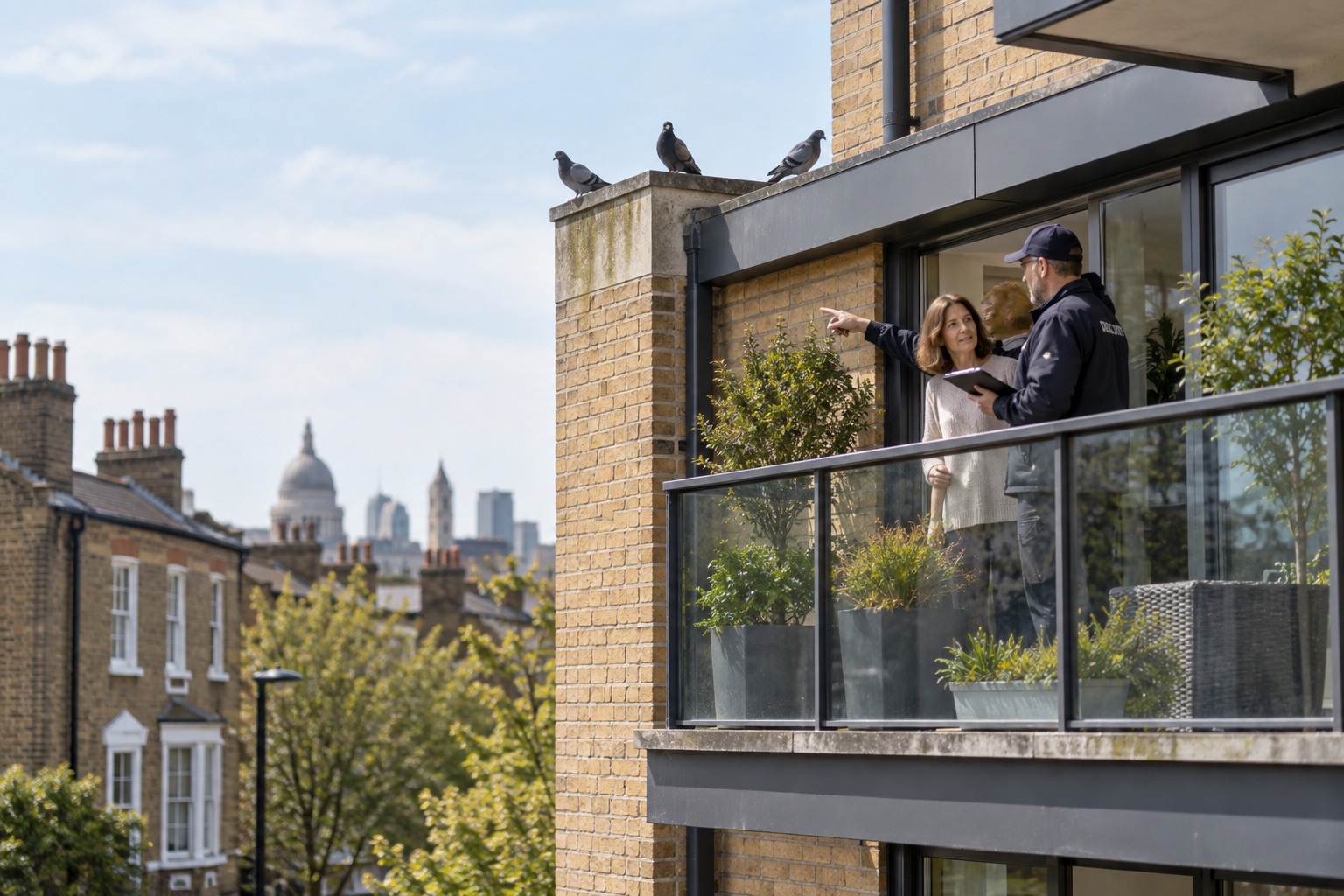
A balcony can have repeated pigeon visits while a nearby ledge remains unaffected. Proofing is more effective when the exact landing and roosting places are surveyed.
What evidence helps?
Photograph the site from a safe position and note droppings, drainage, neighbouring windows and maintenance access. An active nest can change what work is lawful and practical.
What can you do now?
Do not lean over a balcony edge to fit netting or spikes. Avoid covering vents, blocking escape routes or attaching fixings without the building owner’s permission.
Details worth including in your enquiry
- The exact ledge or balcony edge
- Who can authorise fixings
- How cleaning and future inspection will be accessed
Describe observations in your own words and tell us about any treatment already used. Photos can be useful, but there is no need to take a risky close-up, handle droppings or disturb a nest. If a landlord, tenant or manager needs to provide access, say who can coordinate that before a visit is discussed.
Agreeing a useful next step
Ask for a proposal that identifies the protected area, material, fixings, cleaning and future access. In shared buildings, agree who will maintain the installation.
Before agreeing work, ask for the proposed area and method, any preparation or temporary exclusion, the number of visits, the full price and what would lead to a follow-up. Product-specific written instructions take priority over a general article. Sending an enquiry or naming a preferred day does not make a booking.
A common question
Does bird proofing need maintenance?
Yes, a proposal should explain inspection and repair arrangements for the chosen installation.