
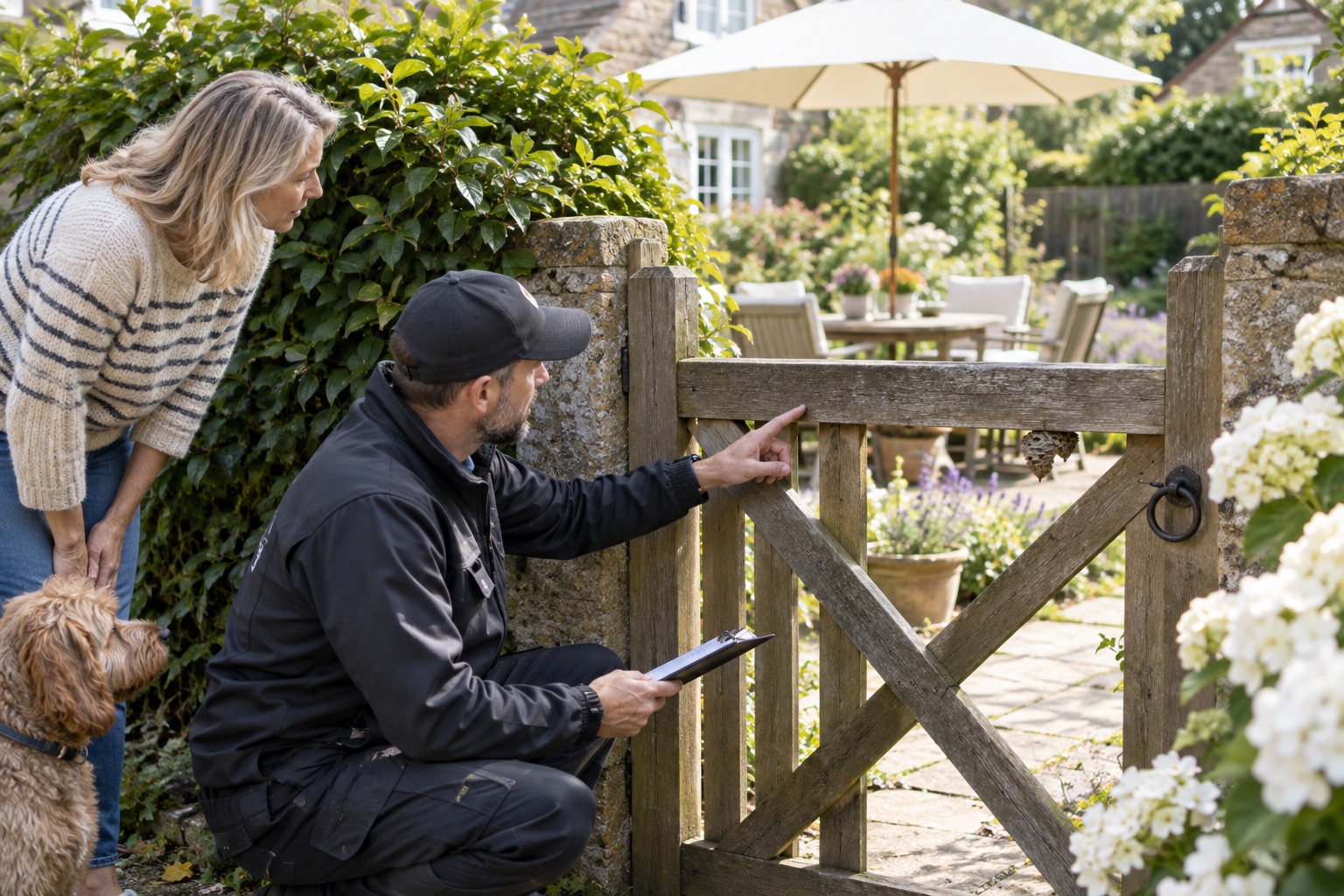
Wasps visiting food outdoors are different from wasps repeatedly travelling to one opening. If a business or household seating area is affected, note the activity and its impact without approaching a possible nest.
What evidence helps?
Record the time, flight direction, suspected entry point and areas people need to use. The position of bins, drinks and food may explain some visits without proving a nest on site.
What can you do now?
Keep people away from a concentrated flight path and manage exposed food and waste. Do not spray wasps at a table or block a possible nest entrance.
Details worth including in your enquiry
- The outdoor route and food or waste nearby
- Whether one opening receives repeated traffic
- Any allergy or urgent access concern
Describe observations in your own words and tell us about any treatment already used. Photos can be useful, but there is no need to take a risky close-up, handle droppings or disturb a nest. If a landlord, tenant or manager needs to provide access, say who can coordinate that before a visit is discussed.
Agreeing a useful next step
Ask whether the issue calls for nest assessment, waste management or both. Access, safety and the actual nest location determine any treatment proposal.
Before agreeing work, ask for the proposed area and method, any preparation or temporary exclusion, the number of visits, the full price and what would lead to a follow-up. Product-specific written instructions take priority over a general article. Sending an enquiry or naming a preferred day does not make a booking.
A common question
Are wasps becoming more aggressive?
A site observation cannot establish a general trend. Focus on the specific risk and source at this property.