
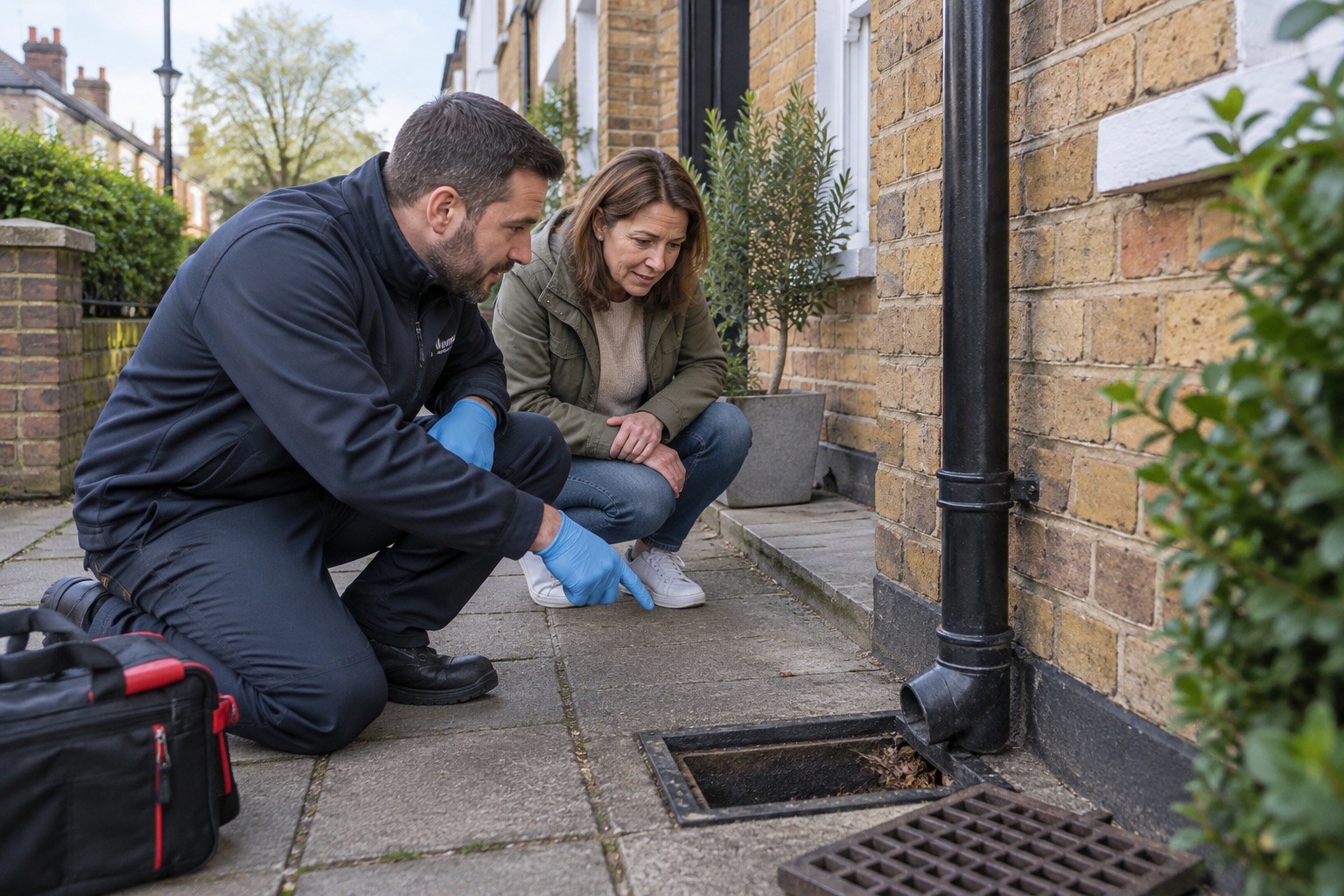
A rat on a boundary wall, near a drain or in a garden is not the same as a rat inside a home. Map the observations before assuming an entry point.
What evidence helps?
Keep dates, locations and movement directions. Photograph accessible holes, damaged vents or bin areas. Do not touch droppings or enter confined spaces to pursue an animal.
What can you do now?
Secure food waste and raise structural repairs with the building owner. Avoid closing a suspected active route until an inspection has considered safe timing.
Details worth including in your enquiry
- A map of outdoor and indoor sightings
- Accessible bin, drain and wall openings
- The person responsible for repairs
Describe observations in your own words and tell us about any treatment already used. Photos can be useful, but there is no need to take a risky close-up, handle droppings or disturb a nest. If a landlord, tenant or manager needs to provide access, say who can coordinate that before a visit is discussed.
Agreeing a useful next step
Ask how the technician will investigate the property boundary, building openings and any interior evidence. The plan should distinguish control, proofing and follow-up.
Before agreeing work, ask for the proposed area and method, any preparation or temporary exclusion, the number of visits, the full price and what would lead to a follow-up. Product-specific written instructions take priority over a general article. Sending an enquiry or naming a preferred day does not make a booking.
A common question
Can a sighting prove where the rat lives?
No. A route or nest needs evidence; a sighting gives only one part of the picture.