
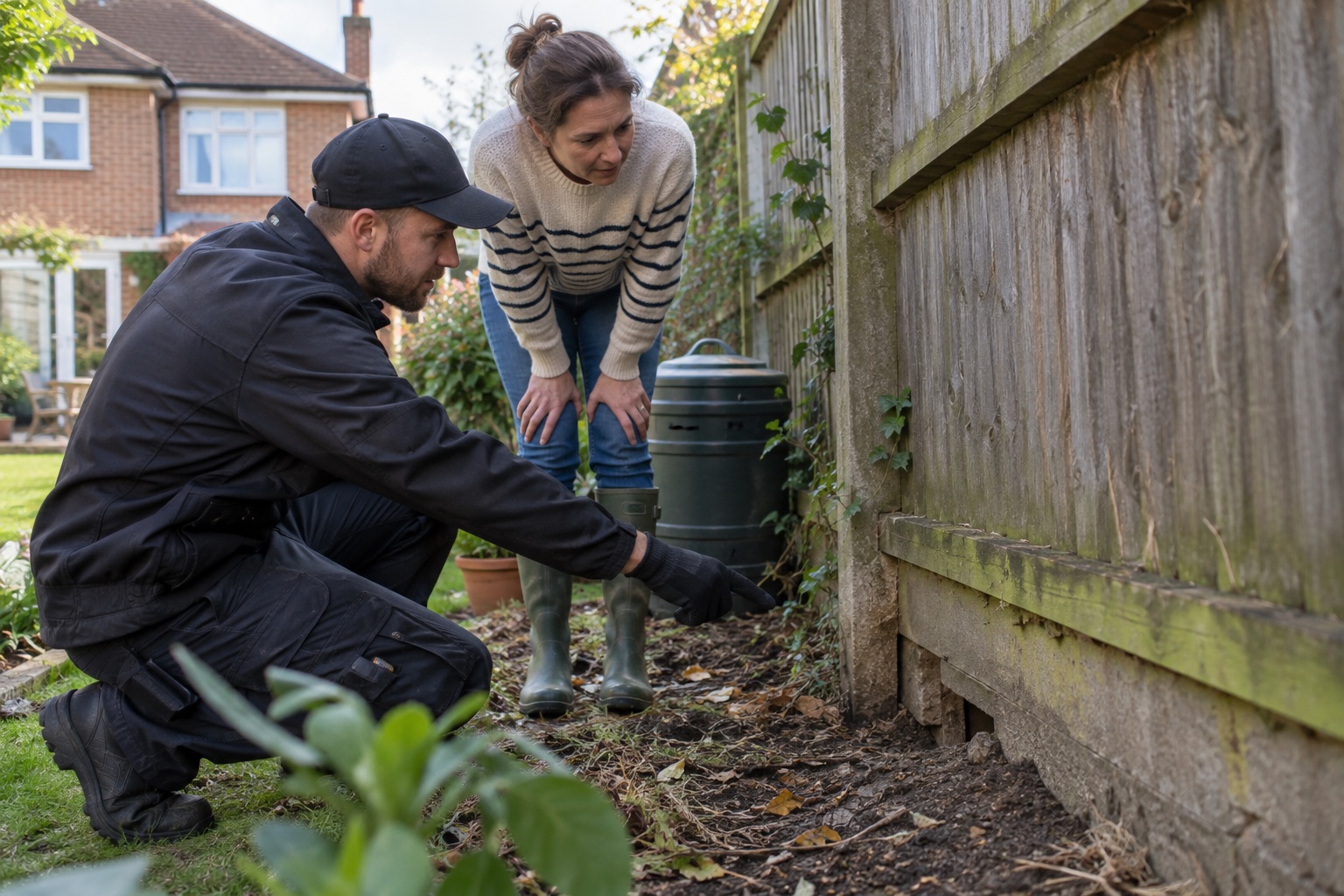
A rat seen in a city street is not proof that it is entering your building. The useful questions are where activity occurs, whether the property offers food or shelter, and what openings may be involved.
What evidence helps?
Keep dates and locations of sightings and photograph an accessible gap or damage. Do not handle droppings or approach an animal. Separate public-area reports from evidence inside the property.
What can you do now?
Close waste containers and raise repair issues with the person responsible for the building. Do not block a suspected active route without a plan for safe control and follow-up.
Details worth including in your enquiry
- Whether evidence is inside the property
- Accessible gaps and food or waste sources
- The repair and follow-up responsibilities
Describe observations in your own words and tell us about any treatment already used. Photos can be useful, but there is no need to take a risky close-up, handle droppings or disturb a nest. If a landlord, tenant or manager needs to provide access, say who can coordinate that before a visit is discussed.
Agreeing a useful next step
Ask the technician to explain monitoring, control and proofing as separate parts of the proposal. A plan should say how findings will be recorded and when repairs can be completed.
Before agreeing work, ask for the proposed area and method, any preparation or temporary exclusion, the number of visits, the full price and what would lead to a follow-up. Product-specific written instructions take priority over a general article. Sending an enquiry or naming a preferred day does not make a booking.
A common question
Are city rats getting bigger or smarter?
A local sighting cannot establish a trend. The practical task is to assess this property and its routes.