
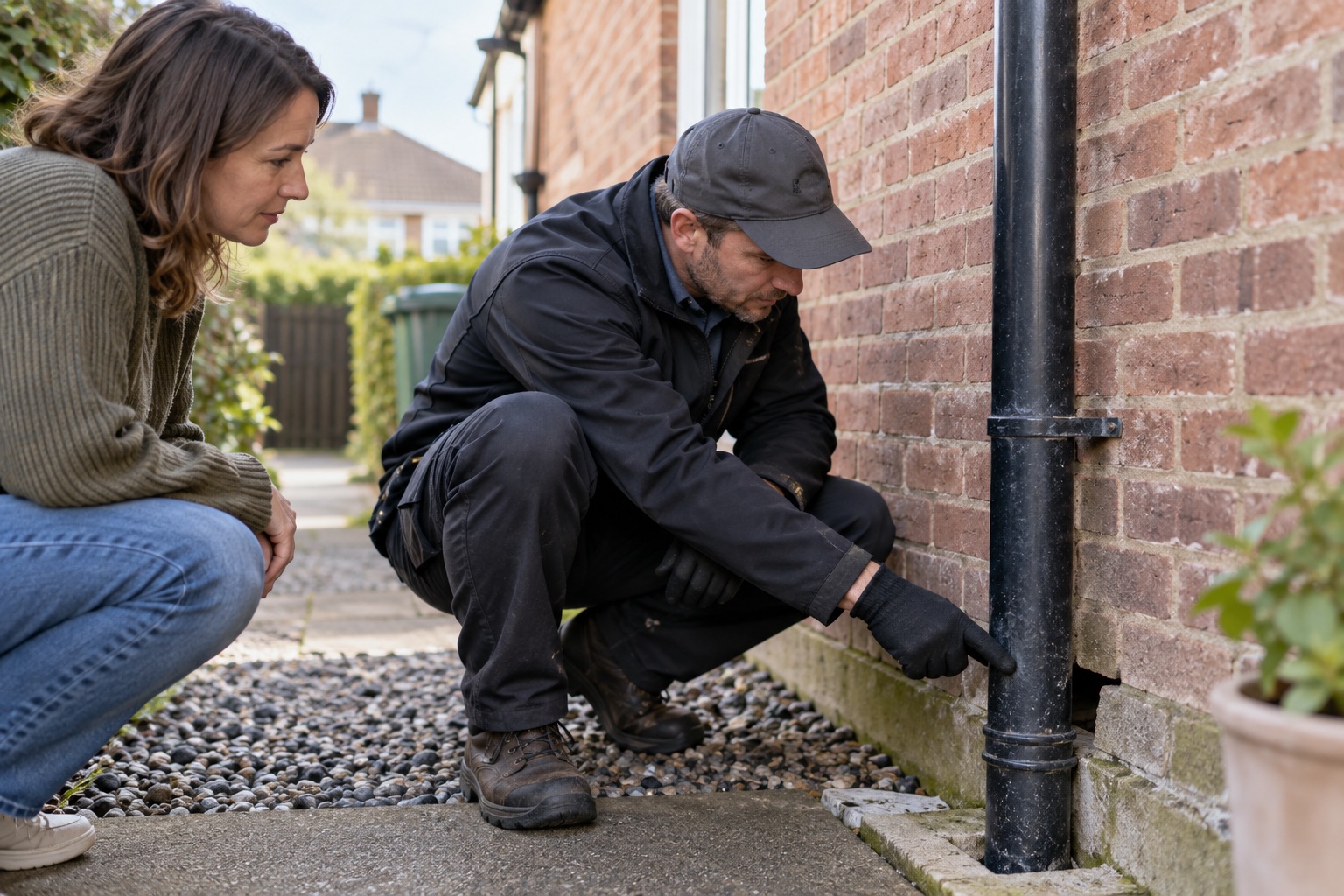
Fresh activity after a repair does not by itself show whether the repair failed, whether another route exists or whether the earlier signs were correctly interpreted. A useful review compares dated evidence with the original plan.
What evidence helps?
Note each new sighting or sign and where it occurred relative to the repaired opening. Keep photographs of the work and the visit report, if available.
What can you do now?
Do not remove or cover evidence, open a wall yourself or place additional products without checking the previous instructions. Continue managing food and waste while the route is reassessed.
Details worth including in your enquiry
- The original repair and treatment record
- New signs by place and date
- Whether another entry route can be inspected
Describe observations in your own words and tell us about any treatment already used. Photos can be useful, but there is no need to take a risky close-up, handle droppings or disturb a nest. If a landlord, tenant or manager needs to provide access, say who can coordinate that before a visit is discussed.
Agreeing a useful next step
Ask the team to inspect the repair, look for alternative access and explain the proposed follow-up. Any extra work and charges should be agreed in writing.
Before agreeing work, ask for the proposed area and method, any preparation or temporary exclusion, the number of visits, the full price and what would lead to a follow-up. Product-specific written instructions take priority over a general article. Sending an enquiry or naming a preferred day does not make a booking.
A common question
Does a new sighting mean the previous treatment failed?
Not necessarily. The timing, evidence and original scope need review.