
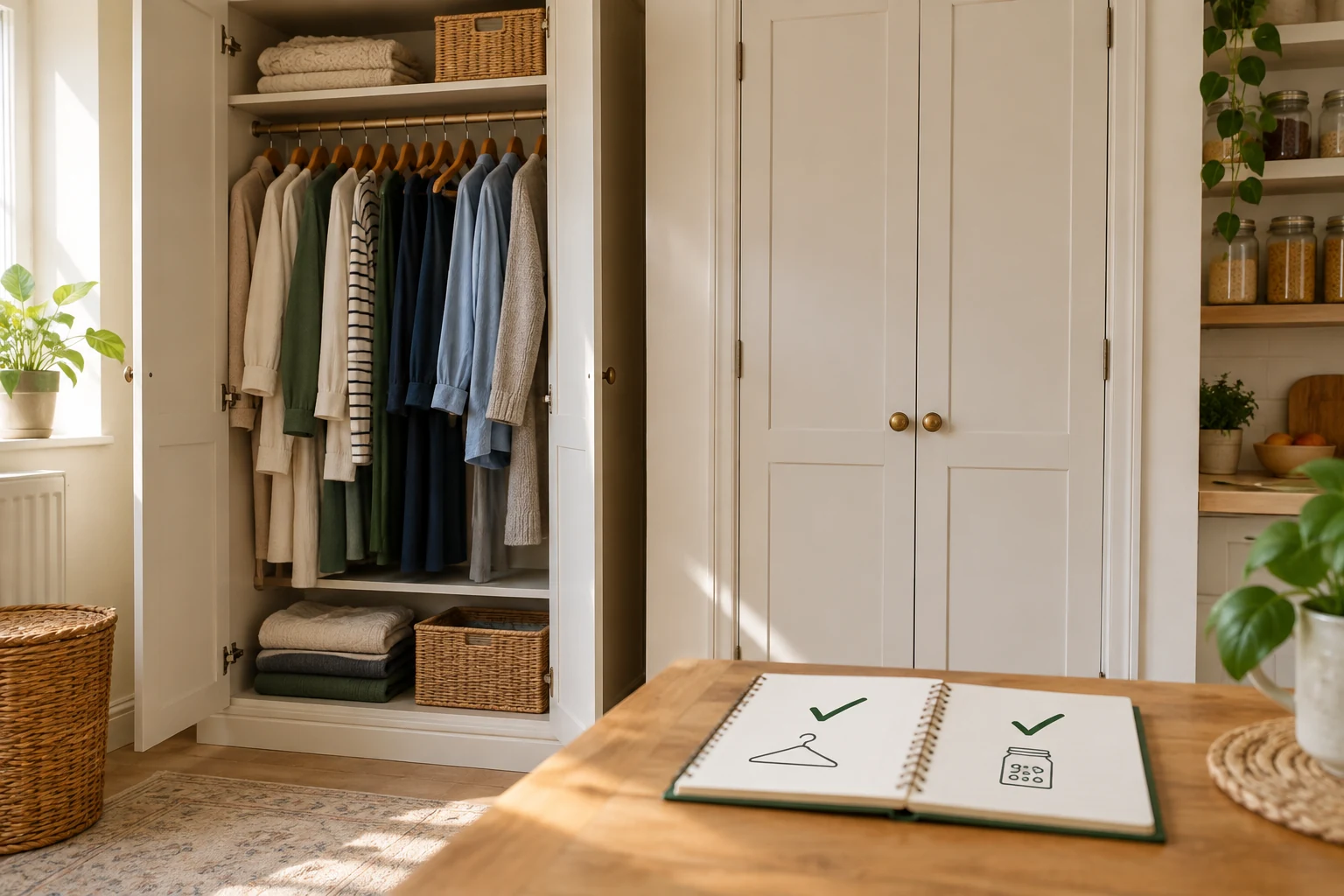
The most useful first clue is not the flying moth; it is where the activity is centred and what material is affected. Damage around wool, fur, feathers, carpets or upholstery points the enquiry towards textile pests. Webbing or larvae in flour, cereal, nuts, dried fruit, pet food or another dry food calls for a stored-food investigation instead.
That distinction is a starting point, not a species identification. Several moths can enter homes, and a small adult found on a wall may simply have flown in. Look for a repeatable link between activity and a food source before choosing what to clean, isolate or discard.
Begin with the affected material
For a wardrobe or bedroom concern, inspect natural-fibre items in good light. Clothes-moth larvae, rather than the adults, damage textiles. BPCA describes irregular holes, loose silk webbing and, for case-bearing clothes moths, a portable silk case covered with fibres from the material. Pay particular attention to quiet folds, carpet edges, the underside of rugs and upholstered seams. A hole on its own is ambiguous: wear, snagging and carpet beetles can produce different kinds of damage.
For a kitchen or food cupboard concern, check the packet in which webbing, clumping or larvae first appeared, then the immediately adjacent dry goods. A pantry investigation follows the food, including unopened-looking packs whose folds or seams may conceal activity. It should not begin by emptying every cupboard across the home. Work shelf by shelf so that suspect and unaffected goods do not become mixed.
A hypothetical example shows why location matters. If two moths appear in a hallway but the only repeatable damage is beneath a wool rug, the rug and nearby natural fibres deserve attention before the cereal cupboard. If webbing is confined to a bag of bird seed in a utility room, the food-storage route is the more useful lead even if a wool coat hangs nearby.
Keep the two investigations separate
Use two short records if signs appear in both places. For textiles, note the fibre, location, type of damage and whether webbing or cases are present. For stored food, note the product, best-before information, where it was stored and whether nearby packs show similar signs. Photographs should show the item and its setting; extreme close-ups without scale are harder to interpret.
Place a suspect food pack inside a sound outer container while arranging advice, so it remains separate from unaffected goods. For valuable or delicate textiles, read the care label before washing, heating, freezing or dry-cleaning. A pest-control article cannot override the manufacturer's care instructions, and an unsuitable cleaning method can damage the item even when the pest concern is real.
Avoid carrying loose contents, rugs or piles of clothing through several rooms for a better photograph. Movement can destroy the useful pattern of where signs were found. It can also make the later inspection harder to interpret.
What to tell the pest controller
Have the first and most recent dates, the exact room and item, and a simple account of any cleaning or products already used. Say whether the concern involves food preparation, a child's room, pets, valuable fabrics or a business stock area. These details affect access and planning; they do not commit you to a treatment.
Ask what evidence is needed to distinguish the likely source, which adjoining areas need checking and what should remain undisturbed before the visit. If a biocidal product is proposed later, preparation, application and re-entry must follow that product's authorised label and the written instructions for the particular visit.
Call The City Pest Company first on 0203 393 2338 to discuss the pattern, or read the clothes-moth service page. A short enquiry can follow if you cannot call immediately.
Frequently asked questions
Does seeing one moth prove that clothes are being damaged?
No. A single adult does not identify the source. Repeated activity beside natural-fibre items, together with fresh textile damage, webbing or cases, provides more useful context.
Are holes in a jumper enough to identify clothes moths?
No. Wear, snagging and other textile pests can also damage fabric. Keep the item where it was found if practical, note its fibre and photograph both the damage and the storage area.
Should every dry-food packet be thrown away?
Not automatically. Isolate clearly affected goods and inspect nearby packs carefully. Preserve labels and purchase details where possible, and seek advice before clearing unrelated cupboards.
Can the same treatment be used for wardrobes and food cupboards?
Do not assume so. The source, surfaces and permitted products differ. Any product use must be appropriate for its authorised purpose and follow its label.
Sources and further reading
External references may contain pest or skin photographs.