
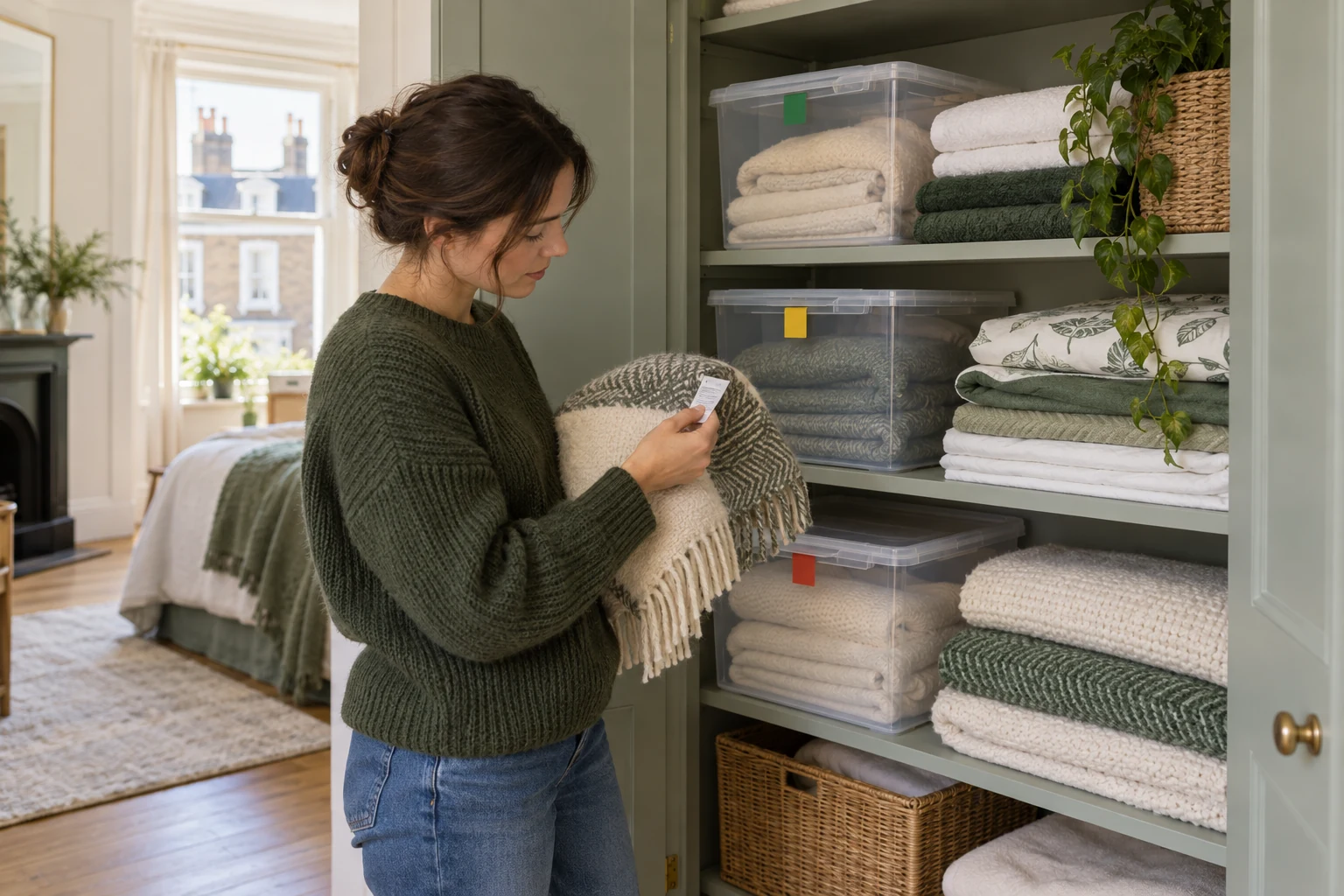
Holes, thinning, loose fibres, cases or webbing in stored bedding can justify a textile-pest inspection, but the damage does not identify the species or show when it occurred. Keep each item with its cupboard or box context, record its fibre content and avoid shaking or spreading it through the home.
Read the storage area before the item
Photograph the closed container or shelf, then the arrangement inside. Note whether signs sit on one folded edge, across several natural-fibre items or on the storage surface. Record how long the bedding was stored, when it was last examined and whether the container was sealed, damp or damaged.
Read care and fibre labels. Wool-filled blankets, feather items, synthetic duvets and cotton sheets present different material questions. Damage on an old wool edge should not be treated like dark spotting on bedding currently used for sleep. The latter may prompt a bed-bug enquiry; the former may point toward a stored-textile issue, wear or historic damage.
Where an insect, larval case or loose material is already safely collectable, place it in a labelled container rather than sticking it to the textile. Include the exact shelf and date. Do not assume an insect found nearby caused the damage until identification supports that link.
Contain without turning the home upside down
Place affected items in separate labelled bags or boxes if they need to move, keeping the original room and shelf on the label. Do not pile all bedding in a living room or carry open fabric between bedrooms. Check adjacent wool, hair, feather, fur or mixed-fibre items in the same storage zone before expanding the search.
Do not wash, heat, freeze, spray or discard delicate bedding from an internet temperature rule. Care labels, construction, pest identification and the proposed method all matter. Valuable, antique or structured items may need advice from a textile conservator or specialist cleaner alongside the pest plan.
For example, new holes on two wool blankets in one loft box and an unrelated mark on a guest-bed sheet should stay as separate observations. Combining them as “bed bugs in all bedding” would distort the inspection.
Call The City Pest Company on 0203 393 2338 if damage appears fresh, insects or cases repeat, or several storage areas are involved. See the clothes-moth service page for context.
FAQs
Do holes prove clothes moths?
No. Damage, associated material and an identified specimen need to be considered together.
Should I empty every cupboard?
Start with the affected storage zone and preserve the location record. Ask how far inspection needs to extend.
Is stored bedding evidence of bed bugs?
Not by itself. Bed-bug assessment focuses on property evidence and places where people rest; textile damage raises a different question.
Sources and further reading
External references may contain pest or skin photographs.